Struggling with Prayer

On this day, after the forty-sixth Presidential inauguration, when the country, according to the media, finally is at peace and at rest and unified, there are some of us (me) who are not at rest and struggling. Though the world says peace and safety at last, I know differently. Though the newspapers and the TV media are smiling and showing a sigh of relief, I am tense and on guard. All is really not going well, and won’t go well. The left is planning war against us Christians. They are scheming against us. And the devil is taking advantage of our unrest. He is and will come against us to destroy us so that we will not rise again. What can be done?

I have been blogging on the Lord’s Prayer, and so, I think this is a good time to put it all together and really try to better my own prayer habits from that Lord’s-Prayer-outline. I, and we all need more and better prayer at this time. If you have been following my blog posts on this prayer, we have pointed out that there is an invocation, “Our Father in Heaven”; then six petitions. The first three have to do with prayer for the glory of God; and then the next three have to do with our own needs.

The struggle for me is how to use this prayer outline in my own prayers. If I pray according to my own feelings and inclinations, I probably won’t use the outline at all; I will just tell God how I feel. If I do that, His prayer outline becomes useless. But if I force myself to use the outline, then my prayers usually become mechanical and sometimes without much heart. So, what do I do? I have to tell you that I haven’t completely figured it out yet. But I have some ideas that I am now thinking about, that I think will allow my prayer to get better. So here are my ideas.

My goal will be to use the Lord’s Prayer outline as a guide and yet to find a way to pray with my heart in it—so that His prayer outline will also be my outline, and also that I will be praying with my own heart.

The first thing that I think will be very helpful is to write out my prayers using the Lord’s prayer as a guide, and to try to write as much as I can. I will have the goal of writing a seven-page prayer with each page under the heading of one of the Lord’s Prayer points. So, on page one I will write on “Our Father.” Then on page two I will write on “Hallowed be Thy name,” and so on. And to make it less mechanical, I will really work on getting smooth transitions from page to page. Maybe on some days, when I have more time, I will try to write two pages per outline point, making it a fourteen-page prayer. I will continue this prayer writing exercise for many days, maybe for a few months.

Next, when I feel that I have mastered the writing, I will try to pray just in my thoughts without writing it out. And each time I do it, I will try to pray with my heart and all the while asking Him to help me pray.

As I think on these ideas, I am so aware that prayer is a struggle and hard work. It is hard to pray correctly and hard to train my mind to be attentive to Him. This is so much of what prayer is—being attentive to Him. It will also be challenging to get everything to fit where it belongs; that is, where in the prayer outline do I confess sins, and where do I pray for friends, and so many other things. These are things that need to be worked out in the prayer writing; and then hopefully, when I graduate from the writing, I will have it figured out—so that in the end I will know how to pray to the Father appropriately and with praise.

In all that I have written here I am mainly talking about your private prayers. Public prayer may be similar, but not as long. I think public prayers should always be short, as not to appear prideful, and also to allow others to pray.

The Lord’s Prayer: The Last Three Petitions

Give us this day our daily bread.

And forgive us our debts, as we also have forgiven our debtors.

And do not lead us into temptation, but deliver us from evil.

Matthew 6:11-13

In previous blog posts I first wrote on the invocation, “Our Father.”  And then I wrote on the first three petitions, which have to do with God and His glory: with His character and holiness, with His kingdom, and with His will.

Now we come to the last three petitions that have to do with our needs and desires. Though this prayer outline is quite brief, it is all inclusive: the needs of the body, the soul, and the spirit are all included. Nothing is left out. The needs of the body are termed as “our daily bread.” The needs of the soul are termed as “forgiveness.” And the needs of our spirit are termed as our deliverance from evil.

Our daily bread

This request is for our material needs: everything that is necessary for our living. And notice that this is the first petition having to do with what we need, suggesting that God cares that we be healthy in our life.

And just because He knows all our needs even before we ask, doesn’t mean that we should not ask Him. We should ask Him every morning because He desires us to speak with Him every day. And He also wants us to realize our dependence on Him; that we cannot live for one day without Him.

Forgive us

In the first section, “And forgive us our debts,” we must recognize that “us” is in reference to anyone who is in the family of God; all others are excluded. So, this prayer is only for His children. Next, know that He will give us forgiveness immediately if we ask (look at 1 John 1:9).

In the next part, “as we forgive our debtors,” notice that it says “as” we forgive our debtors, not “because” we forgive them. Hence, our forgiveness is not based on our work of forgiving others. Rather, we should see it altogether. In the family of God, He gives us the desire and the strength to forgive others; and He also forgives us. It is in the new nature of believers to forgive as God forgives.

We could see it this way: the proof that we are forgiven of God is that we forgive others. And if we have not forgiven others than this is an indication that God has not forgiven us—that we are not His children.

Deliverance from evil

The first part, “And lead us not into temptation,” is asking God not to allow us into any situation where we are liable to be tempted by Satan or the flesh. It is the same as in 1 Corinthians 10:13, where we can ask God to give us a way of escape from temptation. The second part, “deliver us from evil,” is asking God to show us that way of escape and then give us the power to get out of there—or He may just remove the power of evil from us, just as He tamed the lion in front of Daniel (you know the story).

Now here are three reasons why we should pray this third petition:

1. So that our fellowship with him may not be broken.

2. So that we will have a right relationship with Him.

3. So that we can get to know Him.

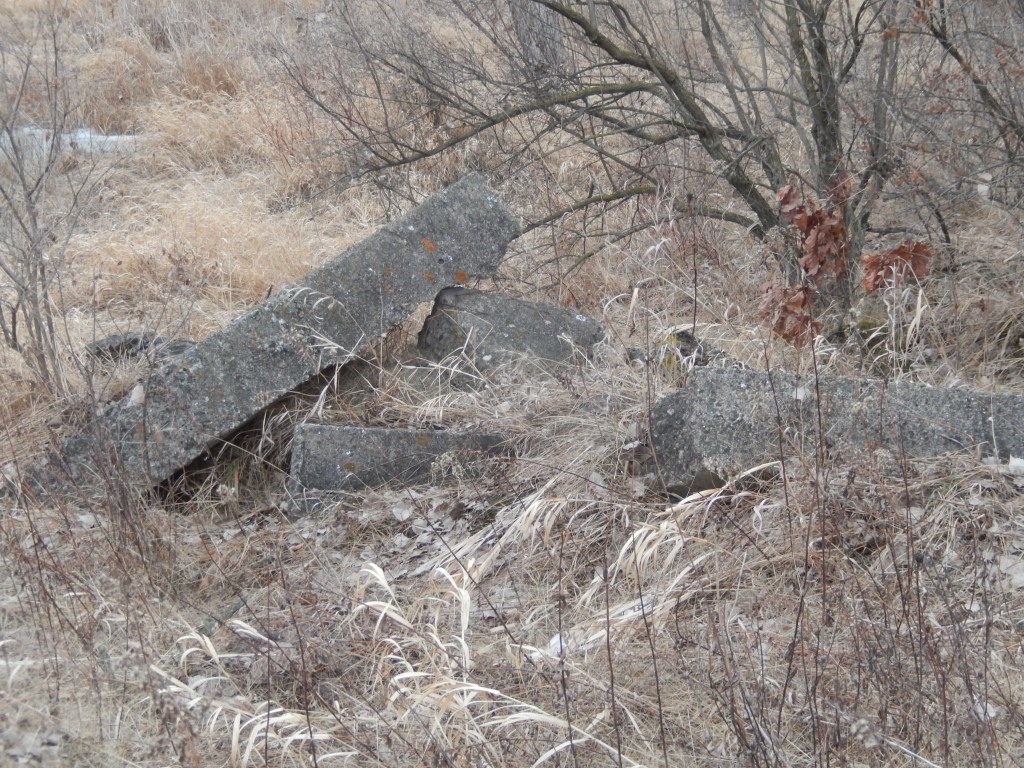
Remnants of the WWII Ammunition’s Plant in Minnesota

Here is one of the buildings left standing–out of over 300 that were in the area.
Slabs of concrete I ran across just the other day, no doubt remnants from the ammunition’s plant.

I moved into this area of Saint Paul, MN, about 30 years ago. At that time, in the late 90’s the ammunitions plan was still being used, though most of the building were gone. Now there is just that building (above) and a few piles of concrete. There is a walking trail going past that building that I always see while walking, and it gets me wondering what it was like–the history of this entire area. I have been curious about it since I ran into those piles of concrete (pictured above). Here is an article I ran across.

Army ammunition plant: an early history

Facility employed more than 21,000 during WWII

by Doris Claeys
Contributing Writer

 Jun 9, 2009

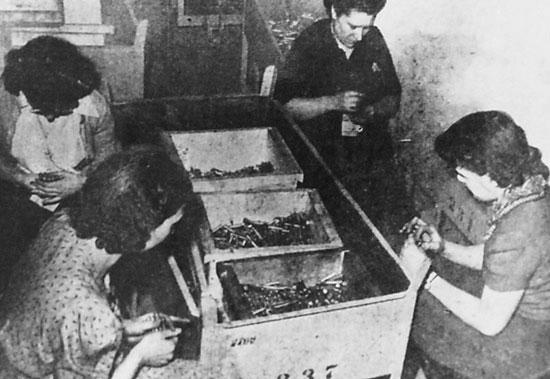
Plant workers.

Female employees work at TCOP in this April 1942 clipping from “Minneapolis Times.” The original caption: “The delicate feminine touch is a vital factor in the rigid inspection of caliber cartridges.” In addition to inspecting, women employees worked as guards at the plant. Photo courtesy of Shoreview Historical Society

Editor’s note: Claeys, the photo archivist for the Shoreview Historical Society, has compiled an album of historic photos donated by the TCAAP plant to the society several years ago. Claeys wrote the following history of TCAAP and loaned photos from the album. Several of TCAAP’s first employees lived in Shoreview, she noted.

ARDEN HILLS — Land that now encompasses the former Twin Cities Army Ammu-nition Plant (TCAAP) was once home to 48 farming families.

Prior to 1942 the land, bordered by Lexington Avenue on the east, County Road I on the north, the Forest Lake cutoff (now Highway 9) on the west and Country Road G (now Highway 96) on the south was primarily used for farming. Local children attended a school at the corner of County Road H and Mounds View Road.

Also located on the land was a 40-acre farm owned by University of Minnesota Plant Path-ologist Dr. Jonas J. Christianson. Christ-ianson had more than 5,000 trees on his land, including most species native to Minnesota. The farm also housed a variety of shrubs, vines and perennial plants — more than 25,000 plants in all.

With the threat of war on the horizon, the U.S. Army searched for and found the Arden Hills site as a viable place to build a new ordinance plant for production of small-caliber ammunition. The St. Paul Pioneer Press Sept. 11, 1940, noted that the purchase price of $133,685 would be divided among various land owners. All land had to be vacated within a couple of months, which meant farmers had to abandon unharvested fields. Christianson found a home for some of his trees, shrubs, vines and plants at a location in South St. Paul, although most had to be abandoned. Two taverns were also part of the purchase; the Rainbow Inn at the junction of Highway 8 and Highway 10 and the Hillside Inn at the junction of Highway 10 and County Road G. These buildings became offices for the plant.

Construction of the $30 million plant began in August, 1941. The major contractors were Walbridge Aldinger Co., which is still operating out of Detroit, Mich., and Foly Brothers. The private firm producing the ammunition — with a contract that reportedly amounted to $87 million — was the Anoka-based Federal Cartridge Corp.

Within 15 months, the Army had built 323 buildings, 21.4 miles of water lines, 21.7 miles of roads, 15.6 miles of railroad track, 31.3 miles of sewer lines, 14.1 miles of gas lines, 16.8 miles of steam lines, 28.9 miles of electric wires and 11.1 miles of telephone lines. In 1941 a Fort Snelling water tower was dismantled, transported and reassembled on a hill near what was to be known as the Twin Cities Ordinance Plant (TCOP).

In between all the construction, soldiers harvested the crops that were growing on the property, including potatoes, garden vegetables, apples, hay and grain. The harvested fruits and vegetables were transported to Fort Snelling for use by military personnel while the grain and hay were sold via sealed bid.

On Dec. 9, 1941, before the first shipment had been produced at TCOP, Army officials swept into various Twin Cities defense plants in search of alien workers. There were no alien workers at TCAAP, though some were removed from private industrial plants.

FDR among officials to visit the plant

Many dignitaries visited the unique plant through the years. Gov. Harold Stassen was at the groundbreaking dedication ceremony in August, 1941. Charles Horn, president of Federal Cartridge Corp., attended the groundbreaking and visited periodically. President Franklin D. Roosevelt toured the plant in 1942. Crown Prince Olav of Norway was quoted after a visit as saying “You Americans do things in a big way.”

Employment and production

Production began at TCOP in January of 1942. Because the primarily rural community needed to employ about 20,000 people, workers were transported from other parts of the Twin Cities. The Twin City Rapid Transit Co. added 15 buses on a run from New Brighton. Minneapolis obtained a (busing) permit, but a similar permit was denied to St. Paul until the Minnesota Railroad and Warehouse Commission reversed its decision.

Initially, more than 600 people applied for jobs daily. Many were rejected as “questionable alien”; others were rejected because they were likely to be drafted, they had a police record or they could not pass a physical.

There were apparently several controversies surrounding methods of hiring and concerns about jobs being “sold” to out-of-towners. Unions in St. Paul and Minneapolis were both concerned that contractors favored the other city’s members. There were strikes as well.

Bus service increased and the number of TCOP employees grew. The rapid growth began to be felt in the area. New Brighton realized it must construct a sewer system because of the boom in population. The Twin Cities was designated a defense area, which meant it became eligible for Federal Housing Administration mortgages for up to 90 percent of the cost of constructing homes for defense workers. At the same time, it was decreed that no homes could be built in an area adjacent to defense plants bec-ause of concern about enemy bomb attacks. As a result, three trailer camps, each consisting of about a dozen trailers, sprung up in the plant vicinity.

The plant was in full operation by 1942. It took 26 to 27 working days for a hunk of brass to become a finished loaded cartridge. Once completed, bullets were tested on a plant firing range.

In November 1942 tragedy struck when Alexander P. Nelson, 67, was killed in his yard by a ricocheting bullet from the plant. Nelson Road just off Lexington Avenue is named in his memory.

By 1943, there were 21,200 employees at TCOP. Women filled many roles at the plant. They were on the production lines and worked as inspectors looking for faulty slugs on the moving belt lines. By 1943 they were working as sub-inspectors for $4.80 per day. Some were employed as guards. The St. Paul Dispatch of July 7, 1943 reported that “Members of the women’s guards were formerly social workers, school teachers, department store clerks and beauty operators. They go to school once a week to learn the fundamentals of first aid, methods of fire prevention, judo for self-defense and military drill.”

As the war progressed, concern grew for the safety of the country. At the plant, guards were increased and watched all activities including daily work of the switchboard operators and inspection of any new items that arrived on the premises. Signs were posted warning workers and visitors against sabotage and espionage: One warning noted that sabotage was punishable by $10,000 or up to 10 years in prison (or both) and another said espionage could result in “imprisonment for 30 years or death.”

Demand declines after war

With the end of WWII, activity slowed at the plant. Governmental budget cuts in 1946 canceled some programs. Some of the small buildings, which were marketed as being suitable for cottages, garages and tool sheds, were sold and moved. Some former office buildings became classrooms, a cafeteria and a study hall at St. Thomas College.

During peace time, the plant produced tractors and farm implements.

The plant’s arsenal was reactivated in 1950 during the Korean Conflict, in 1965 in support of the Southeast Asia conflict and in 1991 to help meet the needs of Operation Desert Storm. It was renamed the Twin Cities Army Ammunition Plant in 1962.

Natures Reflections

After walking on the narrow path along the river for a while, I decided to walk on this broad path–the way that leads to destruction, and there are many that go this way (Matthew 7:14).

It’s beautiful how the light reflects off this grass.

There is a place in this field where this type of grass grows so much taller. It ‘s a mystery to me why it grows so tall in this one particular area.

So beautiful how the setting sun lights up this bare tree.

Walking Beside the River

I always choose the most treacherous path, because to me its the most adventurous.

There is a wider trail just a few yards over to the right where most people walk. But for most of the way I choose “the narrow way.”

You have to be always alert to choose this path, and sure footed. It’s a dangerous road–like the world we live in. We musty be always on the alert for danger!!

The river is the great Mississippi. It is November the 28th, two days after Thanksgiving. Today it is 50 degrees, very warm for Minnesota. This will be maybe my last warm outing of 2020.

I come to the end of my walk. I will walk across that bridge over the river and looking down on the dam.

Living the Righteous Life – Matthew 6:1-4

Jesus, in Matthew 6:1-4, in His Sermon on the Mount, said…

“Beware of practicing your righteousness before men to be noticed by them; otherwise you have no reward with your Father who is in heaven.

2 “When therefore you give alms, do not sound a trumpet before you, as the hypocrites do in the synagogues and in the streets, that they may be honored by men. Truly I say to you, they have their reward in full. 3 “But when you give alms, do not let your left hand know what your right hand is doing 4 that your alms may be in secret; and your Father who sees in secret will repay you.

This is a subject that, I think, is most problematic for Christians—how to live a righteous life before the world. It is problematic because our sinful pride seems to always creep in so that we want to be noticed by others in order that they will think well of us.

Here are four supporting principles of the theme of this passage:

1. Knowing the balance between Matthew 5:16 and Matthew 6:1. In Matthew 5:16 Jesus tells us that we are to let our light shine before men. But then in 6:1 He tells us, “Beware of practicing your righteousness before men to be noticed by them. So, at first glance it seems to be a contradiction. But really it is not if we are careful to look at all the details. It is clear in the first passage that we are to let our light shine before the world. But the motive is clearly that God would be glorified. And this is made clearer in 6:1, but stated differently. Hence, we are not to practice our works before men “to be noticed by them.” That is, that they would think well of us. We must shine before them in such a way that they will see Christ in us. And that attitude of the Christian is most important—because, if we do not have this attitude, we will lose our reward; and the non-Christian is also misled.

2. We are always to do our righteousness to please God not self. And we will always end up doing one or the other. In the flesh we will do to please self, and in the Spirit, we will do to please God. Now the question before us is this: Do we do things for others so that they will please us back? Or do we do things for others so that they will see us as a Christian and move closer to God.

3. Do we live the righteous life for a closer relationship with Him?  In all our righteous acts, we should be seeking to be closer to Him and to please Him. And if we do this, we will be constantly realizing that He is always present with us.

4. It is always good to desire to see Him and be rewarded by Him. Do not seek to be pleased by others or that they will think well of us. But it is always good to seek His rewards; and we should know that He sees everything we do, and He plans to reward us for every good deed.

Also, do not take pride in your unselfishness. Some people keep a journal and they record all the good things they do each day. Don’t do that! Forget about them. God keeps a record of it and He will reward you. Think instead about what God has done for you and how thankful you are.

Source: Studies in the Sermon on the Mount, by D. Martyn Lloyd-Jones

My Update: A New Book, Carb Counting, Book I’m Reading

Here is my update: three things going on with me.

My Latest Book

Pictured above is my latest book. I just finished it. It’s not really out yet, but if you want to buy it I can get it for you. Let me know by email and I will send you a copy. My address is: painterguy@usfamily.net. I have already blogged most of the info in this book on my prophecy blog, but I can at least give you my outline now.

INTRODUCTION

JUST BEFORE THE RAPTURE

PART ONE: ON EARTH AFTER THE RAPTURE

  1. Immediate Effects of the Rapture
  2. Different Theories Emerge
  3. Collapses
  4. Setting up A Global Government
  5. A New Global Religion
  6. A New Global Religion — Part Two
  7. The Rise of the Antichrist
  8. The Rise of the Antichrist — Part Two
  9. The Ezekiel Invasion
  10. The Third Temple

PART TWO: IN HEAVEN AFTER THE RAPTURE

  1. The Judgment Seat of Christ
  2. The Marriage of the Lamb

Carb Counting

My VA doctors say I am a type 2 diabetic, so I need to keep my carbs down to at least 150 a day. If I do that I am fine and I feel good. If not, I’m in trouble. Anyway, though its not fun, I find that it help not only my physical being but my spiritual life as well. Suffering in the flesh always helps a Christian. (read 1 Peter 4:1)

A Book I’m Reading

I just started reading Lincoln’s Last Trial, by Dan Abrams. I’m loving it. I’m finding out a lot about Lincoln that I didn’t know before. He was a great lawyer and an honest one. Anyway, it is a great read and I may read more of Dan Abram’s books.

My Autumn Adventure

I take a short cut on a narrow path up the hill.

Walking through the fallen leaves down the sky trail.

Looking down from above at the winding creek.

On the main trail. A biker ahead.

There are resting benches all along, but I pass them by.

A gorgeous day, trekking along on the winding trail.

I especially like the white birch trees, adding contrast and beauty to the picture.

Is Over-Taxing the Rich a good Idea?


As you will see in this video, over-taxing the rich is always a bad idea. I think it is basically the government stealing money from the hard working businessman. Most of those who are rich worked very hard to get there. They deserve what they earn. And when the government takes it away, it never has a good outcome. Businesses will move out of country to avoid taxes; they will loose all incentive to work; their businesses will end up making less money, thus they have less incentive to keep the business going. Entrepreneurship decreases, because new businessmen have less hope of making it work.