
Seek wisdom from God and He will make your paths straight.
Proverbs 3:6
In all your ways acknowledge Him,
And He will make your paths straight.
7 Do not be wise in your own eyes;
Fear the Lord and turn away from evil.
NASU


Seek wisdom from God and He will make your paths straight.
Proverbs 3:6
In all your ways acknowledge Him,
And He will make your paths straight.
7 Do not be wise in your own eyes;
Fear the Lord and turn away from evil.
NASU


Booker T. Washington
I previously wrote an article on African American slavery, and some of the topics I am planning to blog on. This is a topic that I have been quite interested in lately—I’m not sure why. But I feel that God is calling me into it. The more I read and think about it, the more I feel called. I guess I just like to root for the underdog. And the African American, esp. those who came out of slavery were that. Lately, in my reading, I have seen how they have made great advances as they came out of slavery, even though treated very badly: with lynching, segregation (in the Jim Crow era), being treated so badly by whites, poor working conditions; etc.
And there were a few that were heroes like Ida B. Wells, who dedicated herself to an anti-lynching crusade and made a big difference. I am especially intrigued by Booker T. Washington; a great leader of his time. He rose up out of slavery and became a great educator and encouraged all struggling-colored people to get educated and learn a craft. Many African Americans own their lives to him. Some African Americans have great success stories: how they worked their way to the top, started a business and became rich. It’s so inspiring to read about it. I can’t help but to root for anyone who overcomes such great odds. Recently I found two books by two great African Americans who were slaves but became great leaders: Frederick Douglass and Booker T. Washington. The fact that I found those books so effortlessly is evidence to me that God has given me an open door to continue my study on this subject.
 Jesus taught that prayer must be with forgiveness (Matthew 5:23, 24; 6:14-15; Mark 11:25-26)
 In these passages Jesus seems to be teaching us that if we have not forgiven someone we may as well not pray at all. Mark 11:26 says, “If you do not forgive, neither will your Father in heaven forgive your trespasses.”
Jesus is not saying here that if you don’t forgive others you have lost your salvation; but He is saying that in your unwillingness to forgive someone you have cut off your fellowship with God. Why? Because in your sin against others (in not forgiving them) you sin against God too. Sin always separates us from God, and so this is why when we sin He will not regard our prayers (Ps. 66:18, Jn. 9:31).
Now we know that there are many different kinds of sin, and all of them, if unconfessed will separate us…
View original post 191 more words

I saw in heaven another great and marvelous sign: seven angels with the seven last plagues — last, because with them God’s wrath is completed. 2 And I saw what looked like a sea of glass mixed with fire and, standing beside the sea, those who had been victorious over the beast and his image and over the number of his name.
Here, as John sees the last plagues coming (v. 1)—which will finish the wrath of God—he then sees the victorious ones in heaven, rejoicing in their victory over the beast and in the greatness of God.
They will sing the song of Moses (Ex. 15:1-21), which the people of Israel sang after they passed through the Red Sea; and they will also sing the song of the Lamb (Rev. 5:8-14), which is their rejoicing in the blood of Christ to redeem them from sin.
Verses 3 and 4, I think, is a short condensation of the song of Moses and the Lamb, and is the high points of what will be their worship to God and to the Lamb. In these verses they extol His greatness and holiness and sing of His future millennial reign in the new kingdom when “all the nations will come and worship before [Him].”
They held harps given them by God 3 and sang the song of Moses the servant of God and the song of the Lamb:
“Great and marvelous are your deeds,
Lord God Almighty.
Just and true are your ways,
King of the ages.
4 Who will not fear you, O Lord,
and bring glory to your name?
For you alone are holy.
All nations will come
and worship before you,
for your righteous acts have been revealed.”
There’s nothing like a crisp cool autumn day to mediate on all that God has provided, to reflect on His goodness and mercy, and to dream of what is to come. God will be good in all the seasons of life.


 Jesus taught that prayer must be with faith (Matthew 21:21-22; Mark 11:22-26)
 In theses verses I see three aspects of faith in prayer that Jesus teaches. First of all…
(1) Faith must be in God. Matthew 21:22 says, “Have faith in God.” Prayer with faith, therefore, is prayer that believes in God and in the promises that He has given us. Then it is prayer that expects God to answer based on those promises; it is prayer that has a continuing hope for the answer and a lasting energy to pray until the answer comes. Secondly…
(2) Faith must be with obedience. Prayer with faith is prayer that doesn’t just pray and then believe that God will do it by Himself without us; it is prayer that counts on God to help usdo it; it is prayer that stops praying and starts obeying.
In Mark 11:23 Jesus…
View original post 268 more words

Away from me, all you who do evil,
for the Lord has heard my weeping.
9 The Lord has heard my cry for mercy;
the Lord accepts my prayer (Ps 6:8-9).

I have been thinking lately about the subject of African American Slavery. What an evil thing it is to enslave another person and to treat them so badly. It’s hard to understand. For a while now I’ve been thinking about reading and writing on the subject–just mainly to try to understand it, how it was. I found a textbook entitled, The African American Experience: A History. It’s quite informative and I’m learning a lot. I’m planning on blogging through it. So far I have these ten topics:
As I read on, there will be more topics such as freedom and threats to freedom, the civil war, etc. I don’t know what the topics will be. It’s hard to understand why some people treat others so badly. There is also the sad topic of the mistreatment and slavery of the Jews and also Christians. That to me is more understandable because it was and is the nature of evil–to hate what is good, to hate God and Christ. But why the African American, and why the Native American? I guess evil is all about who you can take advantage of, how you can profit. It’s all about ones own gain–loving yourself in disregard of others.
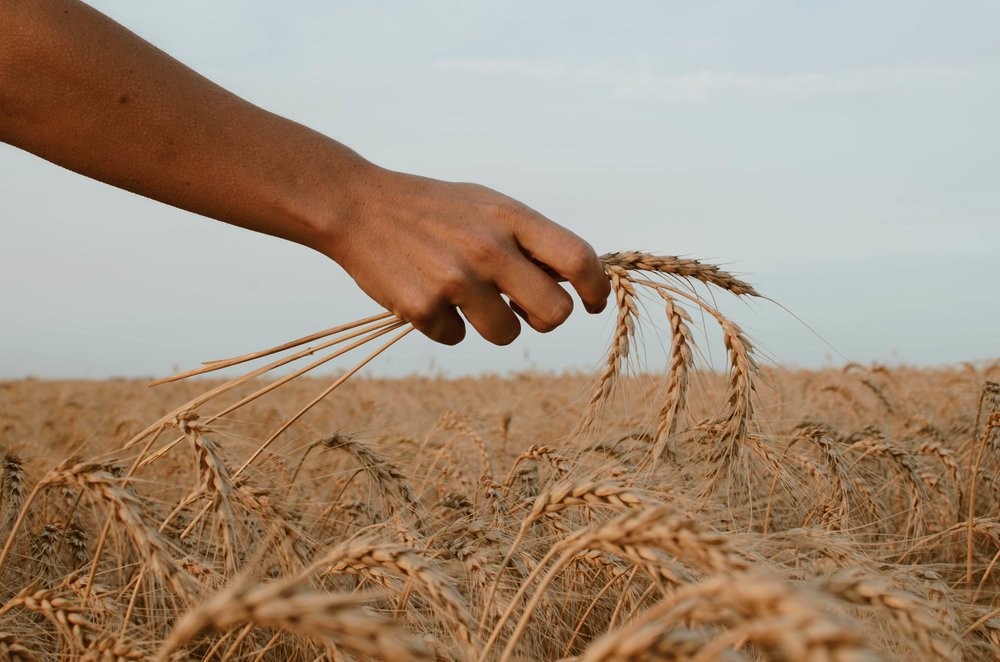
The harvest of the earth speaks of the great judgment of God upon all unbelievers, which occurs at the very end of the Tribulation. We will look at the entire passage and then break it down into three points.
Revelation 14:14-20. Then I looked, and behold, a white cloud, and sitting on the cloud was one like a son of man, having a golden crown on His head and a sharp sickle in His hand. 15 And another angel came out of the temple, crying out with a loud voice to Him who sat on the cloud, “Put in your sickle and reap, for the hour to reap has come, because the harvest of the earth is ripe.” 16 Then He who sat on the cloud swung His sickle over the earth, and the earth was reaped.
17 And another angel came out of the temple which is in heaven, and he also had a sharp sickle. 18 Then another angel, the one who has power over fire, came out from the altar; and he called with a loud voice to him who had the sharp sickle, saying, “Put in your sharp sickle and gather the clusters from the vine of the earth, because her grapes are ripe.” 19 So the angel swung his sickle to the earth and gathered the clusters from the vine of the earth, and threw them into the great wine press of the wrath of God. 20 And the wine press was trodden outside the city, and blood came out from the wine press, up to the horses’ bridles, for a distance of two hundred miles.
The Executioners
There will be two executioners: Jesus Christ and special designated angels. Jesus Christ is seen by John as “a son of man having a golden crown on His head and a sharp sickle in His hand.” This imagery, especially the golden crown on His head, shows us vividly that Christ is victorious in battle; and even before the battle is over, we know that He will conquer His enemies.
His special angels helping Him also have sharp sickles (deadly weapons), and they will be working to gather all the sinners into the great wine press of God (the wrath of God).
The Harvest Will Be Ripe
The harvest in this passage is first of grain (vs 14-16), and then of grapes (17-20). In the first group of verses I think the harvest of grain is dealing with the separation of the tares from the good grain, or the unbelievers from the believers (This is explained for us in Matthew 13:39-43). We can’t be sure exactly when or how this will occur, but I think it will occur sometime before Armageddon—which is what is described in verses 17 through 20.
So, as for this second passage, where the imagery is clearly of the harvest of grapes, the separation has already occurred, and all of the unbelieving people left (represented as grapes) are harvested (judged); they are all ripe and are cast into the great wine press.
Notice that in both cases—the harvest of grain (the separation) and the harvest of grapes—the timing is exactly right. Hence, as the writer of Ecclesiastes puts it, “There is an appointed time for everything” (Ecc. 3:1). And in this case, the time for God’s judgment on unbelievers has come. He has waited patiently for people to repent and come to Him. But there will be an appointed time when His patience runs out and His judgment begins. At that time nothing can be done to delay His time of judgment.
The Great Wine Press
The great wine press is the slaughter of all unbelievers like the pressing of grapes. The writing here portrays all those who will come to the great battle ground in Israel. As is described in the sixth bowl (Rev. 16:13-16), they (hundreds of millions) will be drawn to this place of battle: mainly in Armageddon, but I think in most of the land of Israel, by demons which will come out of the mouths of the dragon, the beast, and the false prophet; these three will demonically convince the world to come and fight. And so, they will be led by demons to this great battle. But they will come to be slaughtered by the angels of God and Christ Himself. They will be slaughtered by the sword, and their blood will be as deep as the horses’ bridles—as it flows for 200 miles from Armageddon in the North to Edom in the south.
Now these who gather, at least most of them, I think, are military men (armies). But what of the civilian unbelievers. I assume that they will be judged too—wherever they may be located. None will escape the sword of God’s wrath. All will die because of their rebellious unbelief. As the seventh bowl judgment describes, some will die by a great earthquake, and some will die by huge hail stones, and I imagine that some will die merely out of fear—the fear of His judgment. In the end there will be no unbelievers left. All will die.

 Stephen Nielsen