Clove Uses for Good Health

When I began to think about what I could blog on today, one idea was to write on my uses of clove extract. Well, I thought about it for a while, but then dismissed the thought, thinking it was maybe too trivial. But then, as soon as I put my mask on to go into the gas station to buy a newspaper and a doughnut, as I usually do, my clove idea was suddenly revived. I had earlier dabbed a small tag on my face with a Q-tip soaked with clove extract, and surprisingly, that clove aroma had somehow filled the inside of my mask—and I was feeling good! It was a delightful experience inhaling that aroma. Suddenly, wearing a mask wasn’t half bad.

I don’t know if clove extract will do anything for skin tags, but I can definitely recommend some uses. Here goes:

1. Getting rid of oral lichen planus. A while back I had a case of this skin rash on the inside of my mouth and after a few applications of clove extract (either by dabbing it or as a mouth wash) it went away. When I reported it to my dentist, and he inspected it, he was amazed and congratulated me on thinking of it.

2. A mouth wash. Cloves will kill mouth bacteria and also will give your mouth a fresh and pleasant taste and smell. I just put a few drops in a cup and then add a little water and gargle.

3. Use as a hand wash. If you have a bad smell on your hands and want to quickly get rid of it. Just apply a few drops, add a little water and wash. Your hands will have a good smell for hours.

4. Use as a cologne. Dab some on the face, and arms.

5. For a great mask smell. Apply anywhere on the face before putting on your mask and breath the fresh smell.

6. Use in coffee or tea or any drink. I usually put about three or four drops in my tea in the morning. It adds a great aroma and taste to your palate. And it’s good for you.

Also, here are some health benefits of cloves.

  • Contains manganese (for brain health) and vitamin K
  • Is high in antioxidants
  • May help protect against cancer
  • Can kill inflammation and bacteria in the mouth
  • May improve liver health
  • May help regulate blood sugar
  • May promote bone health
  • May reduce stomach ulcers

Source for clove health benefits at: https://www.healthline.com/nutrition/benefits-of-cloves

The Tragedy of the Indian Wars – American Greed

I have just finished reading the book Killing Crazy Horse. Earlier I wrote a summary on the book. In this post I will write about how the book has affected me. That is, to give my thoughts on what should have been done differently; also, what should be done now to help the Indians.

The Tragedy of the Indian Wars: No Winners

Clearly, I think the Indian wars, and the outcome, was and is a tragedy. There were no winners. And the reason is because of our sin: our greed, our pride, our selfishness, and our desire for revenge (on both sides). Some may think that the white man were the winners and the Indians were the losers, because the white man was able to kill so many of the Indians and to drive them off their lands, and to basically take whatever they wanted for themselves. However, I don’t think that makes them true winners, especially in the eyes of God.

Some may even have regarded the Indians as evil savages, and a people not worth saving—maybe even like the Canaanites that Joshua was commanded to destroy. But we definitely can’t make that comparison. All the reading I have done on when the white man (Columbus, those on the Mayflower, Lewis and Clark) first came in contact with the Indians, they were mainly friendly. They are different and have a different lifestyle, but that does not make them bad or of lesser worth—as some would suggest.

Accepting the Differences

 I thought it was interesting that Crazy Horse himself regarded his people as like animals, that they lived off of the land. And they apparently do not have the same desire as the white man to build and develop and prosper in the way they do. They have other ways of prospering—by connecting with nature. It seems to me that much more could have been done from the start to get along with the Indians, even to do more to try to understand them and befriend them. I think our government should have done more—instead of just trying to drive them off their land.

The Big Problem: The White Man’s Greed

I think the biggest problem with the white man and with the U. S. government was dealing with the great influx of people to America, who had such a great desire to move in and prosper off the land. They had great desires to go west, to explore, to farm, and to mine gold, etc. Hence, there was a great deal of greed in every heart, and many had the gold fever.

The Criminal Government Policies

The thing that really drove the people west without much regard for the Indians was the unjust and criminal government policies toward the Indians. For example, President James Monroe endorsed a “sea to shining sea mandate,” that gave all American whites the encouragement to live wherever they wanted without regard to the Indians. And later, President Grant who first had a peace policy with the Indians, made a decision to use ultimate military force to steal the Black Hills away from the Indians (because the white man wanted the gold there). And President Grover Cleveland considered the Indians a nuisance and therefore made laws to open all Indian territory up to white settlements. In fact, most of the American Presidents were unjust toward the Indians and even commanded U. S. troops to either force them out or kill them. It was always the white man first. They always had priority over the land. Hence, in my opinion, most of the blame for the injustice toward the Indians should go on the American Presidents, but also on the U. S. military generals that seemed to have so much hatred in their heart—to do so much mutilation and killing of the Indians, esp. the women and children. They just slaughtered them!

Reservations

In the end, the government decided to force the Indians onto government owned reservations. They took their weapons away and they were not allowed to hunt for food. Instead, the government gave them boxes of food, just enough to survive. The reservations became like a prison. Many Indians still live on reservations, and I have heard that most are worse than third-world countries.

I wish I knew what could be done for the Indians. First, I think we should educate all whites on what actually happened—the Indian wars and abuses. Then we need to change our policies and reverse the bad decisions that were made. And we need to make more effort in doing the right things, and to interact with the Indians and find out what they want and how we can help them and lift them up to restore their dignity. I think Indians have so much to offer this world. They are good people and should not have been treated so badly. What can we do to lift them up?

Bitter Cold Just A Day Away

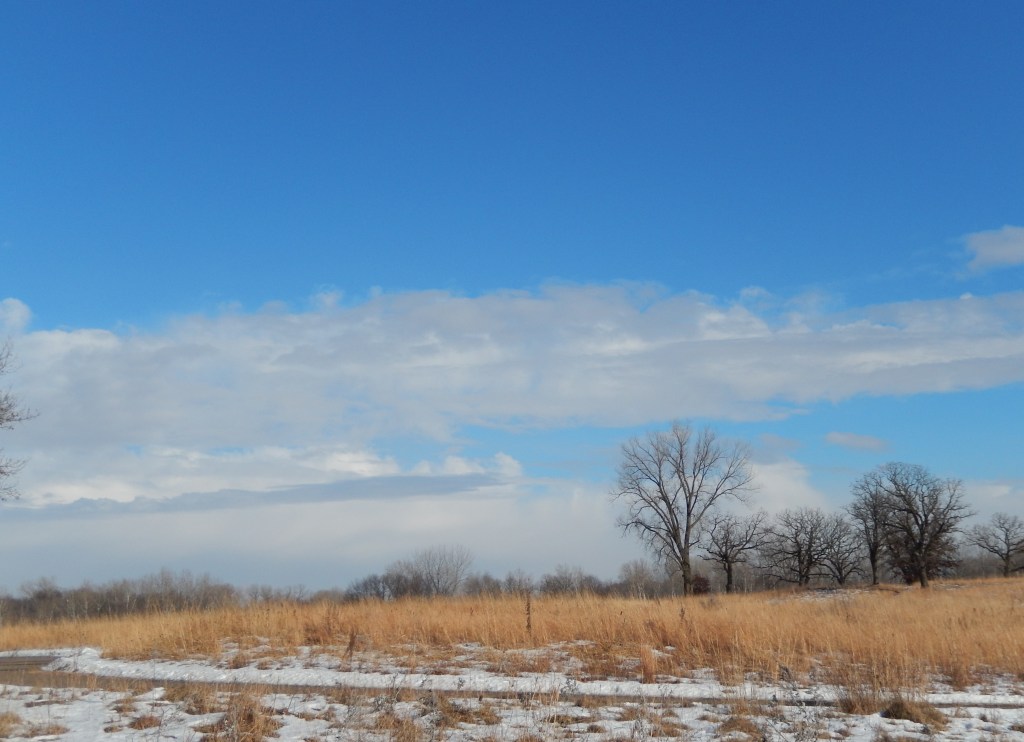
Looking back at this day of 40 degree weather, bitter cold and snow was just a day away, and these Mallard ducks were enjoying their last days.

Soon the creek will be iced over.

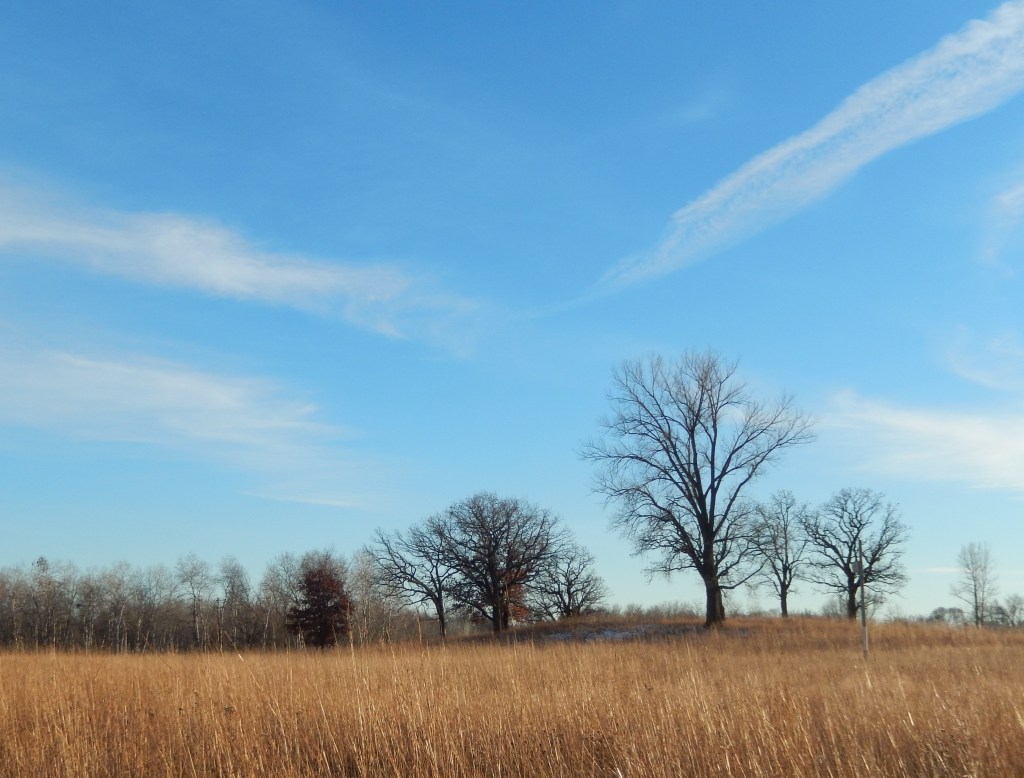
Leaving the ducks, I headed up this familiar trail. It was supposed to be warm, but there was a cold wind from the northwest. Winter was coming.

Before long my pleasant walk was almost over. The days are short and sunlight will soon be gone.

Remnants of the WWII Ammunition’s Plant in Minnesota

Here is one of the buildings left standing–out of over 300 that were in the area.
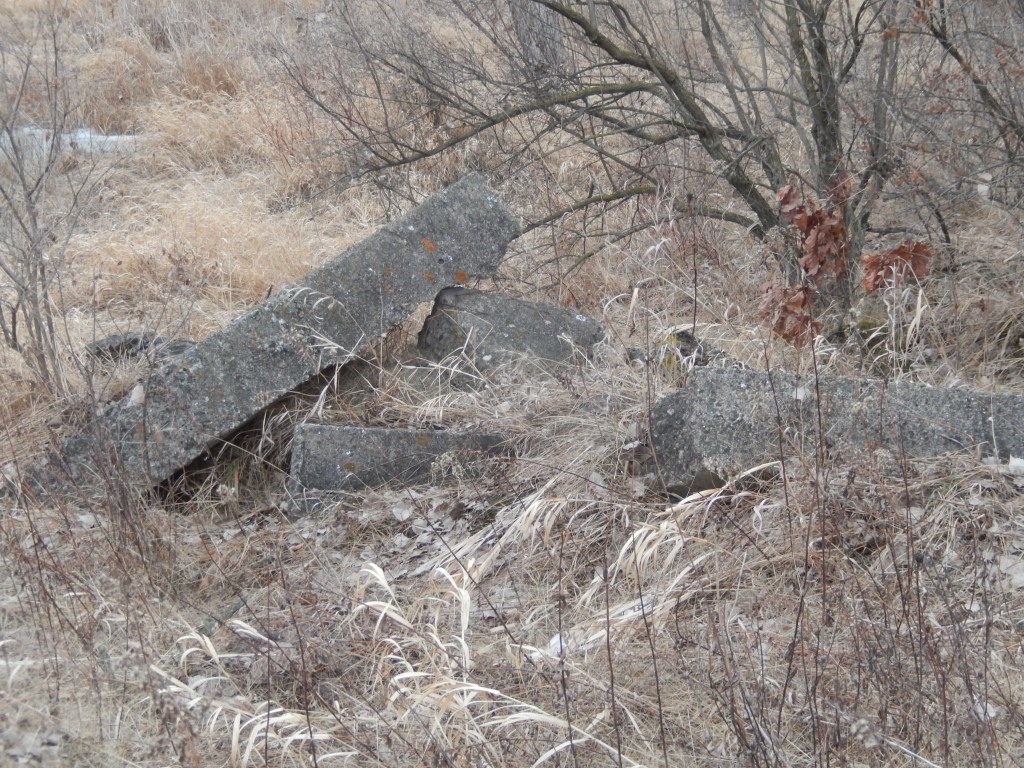
Slabs of concrete I ran across just the other day, no doubt remnants from the ammunition’s plant.

I moved into this area of Saint Paul, MN, about 30 years ago. At that time, in the late 90’s the ammunitions plan was still being used, though most of the building were gone. Now there is just that building (above) and a few piles of concrete. There is a walking trail going past that building that I always see while walking, and it gets me wondering what it was like–the history of this entire area. I have been curious about it since I ran into those piles of concrete (pictured above). Here is an article I ran across.

Army ammunition plant: an early history

Facility employed more than 21,000 during WWII

by Doris Claeys
Contributing Writer

 Jun 9, 2009

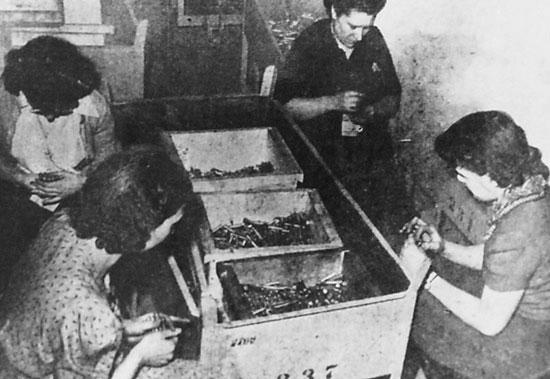
Plant workers.

Female employees work at TCOP in this April 1942 clipping from “Minneapolis Times.” The original caption: “The delicate feminine touch is a vital factor in the rigid inspection of caliber cartridges.” In addition to inspecting, women employees worked as guards at the plant. Photo courtesy of Shoreview Historical Society

Editor’s note: Claeys, the photo archivist for the Shoreview Historical Society, has compiled an album of historic photos donated by the TCAAP plant to the society several years ago. Claeys wrote the following history of TCAAP and loaned photos from the album. Several of TCAAP’s first employees lived in Shoreview, she noted.

ARDEN HILLS — Land that now encompasses the former Twin Cities Army Ammu-nition Plant (TCAAP) was once home to 48 farming families.

Prior to 1942 the land, bordered by Lexington Avenue on the east, County Road I on the north, the Forest Lake cutoff (now Highway 9) on the west and Country Road G (now Highway 96) on the south was primarily used for farming. Local children attended a school at the corner of County Road H and Mounds View Road.

Also located on the land was a 40-acre farm owned by University of Minnesota Plant Path-ologist Dr. Jonas J. Christianson. Christ-ianson had more than 5,000 trees on his land, including most species native to Minnesota. The farm also housed a variety of shrubs, vines and perennial plants — more than 25,000 plants in all.

With the threat of war on the horizon, the U.S. Army searched for and found the Arden Hills site as a viable place to build a new ordinance plant for production of small-caliber ammunition. The St. Paul Pioneer Press Sept. 11, 1940, noted that the purchase price of $133,685 would be divided among various land owners. All land had to be vacated within a couple of months, which meant farmers had to abandon unharvested fields. Christianson found a home for some of his trees, shrubs, vines and plants at a location in South St. Paul, although most had to be abandoned. Two taverns were also part of the purchase; the Rainbow Inn at the junction of Highway 8 and Highway 10 and the Hillside Inn at the junction of Highway 10 and County Road G. These buildings became offices for the plant.

Construction of the $30 million plant began in August, 1941. The major contractors were Walbridge Aldinger Co., which is still operating out of Detroit, Mich., and Foly Brothers. The private firm producing the ammunition — with a contract that reportedly amounted to $87 million — was the Anoka-based Federal Cartridge Corp.

Within 15 months, the Army had built 323 buildings, 21.4 miles of water lines, 21.7 miles of roads, 15.6 miles of railroad track, 31.3 miles of sewer lines, 14.1 miles of gas lines, 16.8 miles of steam lines, 28.9 miles of electric wires and 11.1 miles of telephone lines. In 1941 a Fort Snelling water tower was dismantled, transported and reassembled on a hill near what was to be known as the Twin Cities Ordinance Plant (TCOP).

In between all the construction, soldiers harvested the crops that were growing on the property, including potatoes, garden vegetables, apples, hay and grain. The harvested fruits and vegetables were transported to Fort Snelling for use by military personnel while the grain and hay were sold via sealed bid.

On Dec. 9, 1941, before the first shipment had been produced at TCOP, Army officials swept into various Twin Cities defense plants in search of alien workers. There were no alien workers at TCAAP, though some were removed from private industrial plants.

FDR among officials to visit the plant

Many dignitaries visited the unique plant through the years. Gov. Harold Stassen was at the groundbreaking dedication ceremony in August, 1941. Charles Horn, president of Federal Cartridge Corp., attended the groundbreaking and visited periodically. President Franklin D. Roosevelt toured the plant in 1942. Crown Prince Olav of Norway was quoted after a visit as saying “You Americans do things in a big way.”

Employment and production

Production began at TCOP in January of 1942. Because the primarily rural community needed to employ about 20,000 people, workers were transported from other parts of the Twin Cities. The Twin City Rapid Transit Co. added 15 buses on a run from New Brighton. Minneapolis obtained a (busing) permit, but a similar permit was denied to St. Paul until the Minnesota Railroad and Warehouse Commission reversed its decision.

Initially, more than 600 people applied for jobs daily. Many were rejected as “questionable alien”; others were rejected because they were likely to be drafted, they had a police record or they could not pass a physical.

There were apparently several controversies surrounding methods of hiring and concerns about jobs being “sold” to out-of-towners. Unions in St. Paul and Minneapolis were both concerned that contractors favored the other city’s members. There were strikes as well.

Bus service increased and the number of TCOP employees grew. The rapid growth began to be felt in the area. New Brighton realized it must construct a sewer system because of the boom in population. The Twin Cities was designated a defense area, which meant it became eligible for Federal Housing Administration mortgages for up to 90 percent of the cost of constructing homes for defense workers. At the same time, it was decreed that no homes could be built in an area adjacent to defense plants bec-ause of concern about enemy bomb attacks. As a result, three trailer camps, each consisting of about a dozen trailers, sprung up in the plant vicinity.

The plant was in full operation by 1942. It took 26 to 27 working days for a hunk of brass to become a finished loaded cartridge. Once completed, bullets were tested on a plant firing range.

In November 1942 tragedy struck when Alexander P. Nelson, 67, was killed in his yard by a ricocheting bullet from the plant. Nelson Road just off Lexington Avenue is named in his memory.

By 1943, there were 21,200 employees at TCOP. Women filled many roles at the plant. They were on the production lines and worked as inspectors looking for faulty slugs on the moving belt lines. By 1943 they were working as sub-inspectors for $4.80 per day. Some were employed as guards. The St. Paul Dispatch of July 7, 1943 reported that “Members of the women’s guards were formerly social workers, school teachers, department store clerks and beauty operators. They go to school once a week to learn the fundamentals of first aid, methods of fire prevention, judo for self-defense and military drill.”

As the war progressed, concern grew for the safety of the country. At the plant, guards were increased and watched all activities including daily work of the switchboard operators and inspection of any new items that arrived on the premises. Signs were posted warning workers and visitors against sabotage and espionage: One warning noted that sabotage was punishable by $10,000 or up to 10 years in prison (or both) and another said espionage could result in “imprisonment for 30 years or death.”

Demand declines after war

With the end of WWII, activity slowed at the plant. Governmental budget cuts in 1946 canceled some programs. Some of the small buildings, which were marketed as being suitable for cottages, garages and tool sheds, were sold and moved. Some former office buildings became classrooms, a cafeteria and a study hall at St. Thomas College.

During peace time, the plant produced tractors and farm implements.

The plant’s arsenal was reactivated in 1950 during the Korean Conflict, in 1965 in support of the Southeast Asia conflict and in 1991 to help meet the needs of Operation Desert Storm. It was renamed the Twin Cities Army Ammunition Plant in 1962.

Fasting: How to Fast Correctly

In general, fasting is abstinence from food for spiritual reasons; it is that personal discipline that aids us in our spiritual life.

To start, I want to tell you that I am not a regular faster, nor do I enjoy even the thought of it. But as any discipline, I know that it has its purpose; and so, as I present this information—which happens to be in the chapter of the book I am blogging through, Studies in the Sermon on the Mount—I am now trying to follow God’s will if He should guide me to fast. I will now present to you the follow four points:

The Biblical Basis for Fasting

Some would argue that in this day of grace, in this New Testament era, we should not be fasting. But clearly, there is a biblical basis for it, both in the Old and New Testament. As D. Martyn Lloyd-Jones points out, under the Law of Moses the children of Israel were commanded to fast once a year. And there are several examples of Old Testament fasting. Fasting is also mentioned in the New Testament. It is not directly commanded or taught by Jesus, but is indirectly taught and approved of by Jesus, since He Himself fasted (Matt. 4:2), and so did the early church (Acts13:2-3; 14:23).

Lloyd-Jones points out that the problem many are having now with fasting is clearly an over-reaction against Catholicism; for you recall from history that fasting was a huge part of the Catholic religion and clearly was an incorrect use of it.

The Wrong Use of Fasting

If we stick to what fasting basically is, a discipline that aids us in pray and in our spiritual relationship with God, that will keep us from any wrong use of it. With that being said, here are four wrong uses:

1. Fasting should not be done as a good work in itself.

2. Fasting should not be done to try to make yourself more disciplined or more spiritual.

3. Fasting should not be done to get a blessing from God or to be more prosperous.

4. Fasting should not be done to see if we can achieve some personal fasting goal—for example, to try to fast for a certain length of time. Overall, fasting itself will not please God. It should not be an end it itself. It is always to be regarded as a means to an end and not as an end in itself.

Correct Purposes for Fasting

Again, we will begin with the definition of fasting, which is a discipline to aid us in our spiritual life. From there we derive the following purposes:

1. To aid us in our lack of faith in doing some spiritual work (example: casting out a demon, Matt. 17:19-21).

2. Basically it is to be closer to God. We get this from Mark 2:18-20, where Jesus explains that His disciples did not fast because they were with Him, and so they had no need to fast. But after Jesus would be “taken away from them,” then they would fast—for obvious reasons.

3. As an aid in doing a special work of God, which would require a special spiritual guidance (example: Acts 14:2-3, choosing Barnabas and Saul as missionaries; Acts 14:23, appointing elders).

4. To receive help from God when faith is lacking (Example: the nation of Israel fasted when Moab and Ammon came against them and they were afraid, 2 Chron. 20:3).

How to Act When Fasting

Just as with giving and praying, fasting, Jesus said, is a practice of righteousness (Matt. 6:2, 5, 16), and therefore, we should do these things without sounding a trumpet, as to inform those around us what we are doing. For any act of our Christianity should be an act of humility and just between us and God. Fasting therefore should be done in secret, or, without people knowing that we are doing it. Hence, we shouldn’t draw attention to what we are doing by not washing or shaving. We should rather look as normal as possible. And if we are worried that we will not get our proper recognition, we can take comfort in the fact that God sees everything we do and will secretly reward us (Matt. 6:18).

Matthew 6:16-18

“And whenever you fast, do not put on a gloomy face as the hypocrites do, for they neglect their appearance in order to be seen fasting by men. Truly I say to you, they have their reward in full. 17 “But you, when you fast, anoint your head, and wash your face 18 so that you may not be seen fasting by men, but by your Father who is in secret; and your Father who sees in secret will repay you. NASB

The Merciless Indian Wars: How America Got Started

A Depiction of the Trail of Tears. About 4000 Indians died while being forced to move from their homes.

I’ve been reading the book, Killing Crazy Horse: The Merciless Indian Wars in America. It’s been quite informative for me. Those Indian wars were not at all like it has been portrayed on TV. It was so gruesome, so bloody!

I learned that for the most part, the beginning of the conflict with the Indians had most to do with our (the white man’s) desire to expand and own land. And we were unwilling to share with or negotiate peacefully with the Indians; so, we took steps to run them off. I was surprised that most of our Presidents not only did not like the Indians, but were all in favor of either moving them out of the way or exterminating them. And the whites in those days regarded the Indians the same way as they regarded the blacks: as less than human. In fact, many of the Indians that were captured were used as slaves just like the blacks.

As the book tells the story, the Indian wars began in the south, in Florida and Georgia. That was the territory of the Creek Nation—the name of the Indians there. Well anyway, as more and more of the white man moved in to that area conflicts arose. The white man did not always respect the Indians, and the Indians in turn were raiding the white man, and also other Indian tribes—mainly just to stay alive. Soon, as the conflicts increased, our Presidents at that time—Madison, Monroe, and Jackson took it upon themselves to order the U. S. military to either move the Indians or destroy them. One of terrible tragedies for the Indians occurred when thousands of Cherokee Indians were forcibly moved from their homeland in the southeast; they forced them to walk over a thousand miles across mountains and in cold weather to west of the Mississippi. Over 4,000 died along the way of starvation, and frostbite. It was called the “Trail of Tears.” The Army was supposed to treat them well, but their orders were disregarded. Many of the Indians were peaceful and compliant even as they suffered; but some of the tribes, later, like the Apache and the Comanche had strong chiefs and did not lay down so easily.

It was apparent to me that the Indian wars were not at all just. In fact, there didn’t seem to be any rules of war. Most of the fighting was not only to the death, but the fighting on both sides was angry and cruel. They fought not only to kill but to torture and humiliate and massacre.  And it seemed like both sides enjoyed killing the weaker and innocent—the women and small children. On one occasion, when a group of 700 Army troops came into an Indian camp expecting to find Crazy Horse and his men, they were surprised to find that they were all gone, except 100 women and children. Well, they left no one alive. Scalps were taken, heads were severed, and they were all horribly mutilated. I guess I was wrong to think that only the Indians took scalps.

Well, don’t you know that Crazy Horse had his revenge. At one massacre of 81 U. S. soldiers, all of them were left naked in the bitter cold, “eyes torn out, noses cut off…teeth chopped out…brains taken out… hands and feet cut off…private parts severed,” etc. It is easy to see that there was something evil going on in these wars. There was more than just hatred. I think there must have been Satanic and demonic spirits controlling them. Who could do such things? I had no idea that this went on. And the savagery was not just by the Indians. It was by both sides. And it was not just men against men; it was on all, women as well as children, even infants.

We have been so shocked to hear about the terrible things ISIS has done. Well, now I know that that kind of brutality has been going on for centuries. And I am so ashamed now to learn how this nation got its start, with so many of our Presidents and leaders approving and directing the Indian killings.

WWII Abandon Army Building Becomes Art Studio

This old abandon WWII Army ammunition’s building has become somewhat of an art studio for young gang members, or maybe just a place for bored kids to practice their art craft.

This looks like it was quite a place in it’s day. This is one of several military buildings that were quickly built during WWII to manufacture ammunition’s needed. Since sometime in the 1960’s it has been abandon.

I wonder why they haven’t torn down this building yet. I walk by here often.