Peter Directs the Disciples to Elect A Replacement for Judas

Acts 1:12-16

Then they returned to Jerusalem from the mount called Olivet, which is near Jerusalem, a Sabbath day’s journey away. 13 When they had entered the city, they went up to the upper room where they were staying; that is, Peter and John and James and Andrew, Philip and Thomas, Bartholomew and Matthew, James the son of Alphaeus, and Simon the Zealot, and Judas the son of James. 14 These all with one mind were continually devoting themselves to prayer, along with the women, and Mary the mother of Jesus, and with His brothers.

15 At this time Peter stood up in the midst of the brethren (a gathering of about one hundred and twenty persons was there together), and said, 16 “Brethren, the Scripture had to be fulfilled, which the Holy Spirit foretold by the mouth of David concerning Judas, who became a guide to those who arrested Jesus.

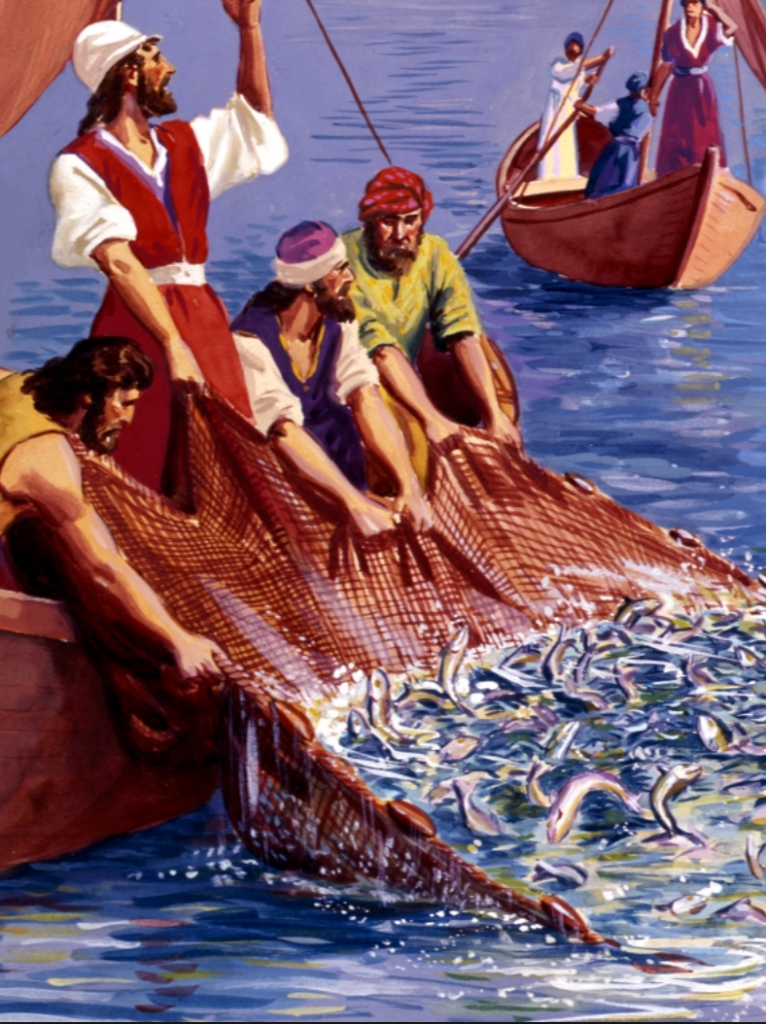
Sometime after Jesus performed the miracle of fish on the Sea of Galilee in front of the seven disciples, and after Jesus encouraged Peter to continue to follow Him in discipleship (Jn.  21:1-23), He gathered all eleven of His disciples together on the Mount of Olives where He spoke His last words to them and then ascended to heaven (Acts 1:4-9).

The disciples then, according to Jesus command, immediately went to Jerusalem (a Sabbath day’s journey) to the upper room, where they were staying. We don’t know what kind of arrangements they had made with the owner; whether they purchased the room, or were renting it, or he was just letting them stay there. But we know that they ate the last supper there; and it was also where Jesus appeared to them after His resurrection. Now they would stay there as a place of safety, and to wait and pray until the day of Pentecost (vv. 4-5).

It appears from the text that the upper room was rather large; for one hundred and twenty people were gathered there, waiting for the coming Holy Spirit.

As for Peter, he had apparently felt the strong call of God to lead this group of disciples. And here it seems that he was led by God to give his first sermon, mainly having to do with electing another man to replace Judas. And as it happened by lot, Matthias was the one who was divinely chosen (verse 26).

Peter uses the Sword

John 18:10-11 (also Matthew 26:47-54; Mk. 14:47-49; Lu. 22:50-51)

Simon Peter then, having a sword, drew it and struck the high priest’s slave, and cut off his right ear; and the slave’s name was Malchus. 11 So Jesus said to Peter, “Put the sword into the sheath; the cup which the Father has given Me, shall I not drink it?”

Only John’s gospel is clear about who cut off the ear of the slave Malchus. It was Peter. The other gospels just said that he was one of those who was with Jesus. Matthew’s gospel also was more descriptive than the others about why they were not to use the sword.

As for Peter, he proved here that he was one to act without thinking. What was he intending to do? fight the entire Roman army? If he did, Jesus had a response for him; that He had at His disposal more than twelve legions of angels—if it was God’s will to fight them. But Jesus knew that what was happening was according to God’s will. And so, He had no will to fight. He was even compassionate toward His enemies; and He reached out and touched the one who was injured by the sword so that he was healed (Lu. 22:51).

Jesus Prayed while the Disciples Slept

Matthew 26:36-41

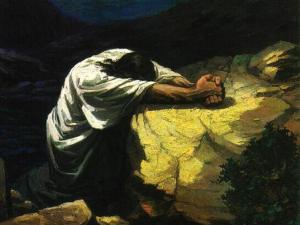
Then Jesus came with them to a place called Gethsemane, and said to His disciples, “Sit here while I go over there and pray.”  37 And He took with Him Peter and the two sons of Zebedee, and began to be grieved and distressed. 38 Then He said to them, “My soul is deeply grieved, to the point of death; remain here and keep watch with Me.”

39 And He went a little beyond them, and fell on His face and prayed, saying, “My Father, if it is possible, let this cup pass from Me; yet not as I will, but as You will.”  40 And He came to the disciples and found them sleeping, and said to Peter, “So, you men could not keep watch with Me for one hour?  41 “Keep watching and praying that you may not enter into temptation; the spirit is willing, but the flesh is weak.”

Jesus and His disciples came to the garden of Gethsemane. And when they arrived Jesus felt the need to pray; so He took with Him Peter, James and John and went a little further to pray, leaving the others. Then He felt an even deeper need to pray and went on by Himself. Hence, as it seems, there were three groups: the main group of disciples (minus the three), a little further there was Peter James and John, then further, only Jesus. All three groups were to be praying.

Notice that Jesus trusted Peter (and also James and John) to pray more than the others. But they turned out not to be trustworthy. They fell asleep. Notice also that in Mark’s gospel Jesus called Peter Simon. This I think was an indication that Jesus was frustrated with him—that he was not living up to his chosen name (Peter, the rock). But regardless of Jesus’ displeasure in His disciples, He continued to encourage them to keep watching and praying.

The gospel of Luke only recorded how an angel appeared to Him to strengthened Him. It may occur to you (as it does to me) what He needed strength for, and how could an angel help Him. Well, I don’t think angels have any difficulty with temptation; I think they are always strong and incapable of sin. They may not even understand it. Their mission is to help and encourage people with whatever they can do according to the will of God. I think what they did for Jesus was just to encourage Him to keep praying. And He did pray very fervently and was sweating drops of blood.

Peter Gets His Feet Washed

John 13:5-11

Then He poured water into the basin, and began to wash the disciples’ feet and to wipe them with the towel with which He was girded. 6 So He came to Simon Peter. He said to Him, “Lord, do You wash my feet?” 7 Jesus answered and said to him, “What I do you do not realize now, but you will understand hereafter.”  8 Peter said to Him, “Never shall You wash my feet!” Jesus answered him, “If I do not wash you, you have no part with Me.”  9 Simon Peter said to Him, “Lord, then wash not only my feet, but also my hands and my head.” 10 Jesus said to him, “He who has bathed needs only to wash his feet, but is completely clean; and you are clean, but not all of you.”  11 For He knew the one who was betraying Him; for this reason He said, “Not all of you are clean.”

That evening, when the Passover was ready, and when they all were seated, Jesus suddenly got up, wrapped a towel around His waist, poured water into a basin and began to wash His disciples’ feet.

Peter (and I think all of the disciples) was embarrassed and shocked that Jesus would stoop so low as to wash their feet. But Jesus had a different purpose in mind than mere physical washing. He was by this act cleansing them spiritually. When Jesus said to Peter “What I do you do not realize now, but you will understand hereafter” and also when He said, “If I do not wash you, you have no part with Me,” these words were to indicate to them a spiritual cleansing, so that they would be acceptable to God. I’m sure they did not fully realize His actions, but later they would.

Peter here, after Jesus said to him, “If I do not wash you, you have no part with Me,” was eager to have Jesus wash him—all of him; for he very much wanted to have fellowship with Jesus and come into His kingdom.

But Jesus not only was demonstrating a spiritual cleansing, but also a lesson in humble service; for in verses 14 and 15 He said that He as their Lord and Teacher was giving them an example to follow (read 1 Pt. 5:3).

Jesus Tells Peter that He would Reign with Him

Matthew 19:27-28 (also in Mk. 10:28-31; Lu. 18:28-30)

Then Peter said to Him, “Behold, we have left everything and followed You; what then will there be for us?” 28 And Jesus said to them, “Truly I say to you, that you who have followed Me, in the regeneration when the Son of Man will sit on His glorious throne, you also shall sit upon twelve thrones, judging the twelve tribes of Israel.

Before this text there seemed to be a long stretch of time when Peter kept silent; at least nothing was recorded. However, Jesus ministry was constant (and I’m sure Peter and the others were taking everything in and being awed by what Jesus was doing). They traveled from village to village, and Jesus was teaching and healing many.

While on His way to Jerusalem for the last time, He encountered a rich young ruler who asked Him what he must do to inherit eternal life (Luke 19:16-26). When Jesus told him that he must keep the commandments, the man said that he had already kept them. But when Jesus said that he must also sell his possessions and give the money to the poor and follow Him, the ruler went away with a sad face because he knew he could not do that.

Then Jesus turned to His disciples and told them how hard it was for the rich to enter into heaven. He said that it is easier for a camel to go through the eye of a needle. The disciples were astonished and wondered who then could ever be saved. But Jesus came to their rescue and said, “All things are possible with God.”

At this point a light flashed in Peter’s head because he realized that he and his comrades, unlike the rich man, had left everything to follow Him.

Well, Jesus was more than willing to tell them what was to come for them. They would reign with Him on His throne (a reference to the earthly kingdom; but then later in heaven we all will reign forever with Him, Rev. 22:5).

Peter is Given a Lesson On Forgiveness

Matthew 18:21-22

Then Peter came and said to Him, “Lord, how often shall my brother sin against me and I forgive him? Up to seven times?” 22 Jesus said to him, “I do not say to you, up to seven times, but up to seventy times seven.

Jesus had just been teaching on what to do when a brother sins against us (vv. 15-20). I suppose in this short text, Peter wanted to contribute something on this subject. He may have thought he was being quite brilliant by saying that we should forgive a person who sins against us up to seven times. But Jesus wouldn’t play Peter’s game. Jesus could have praised Peter for his words, yet He wanted him to know that there is to be no limit to forgiveness (seventy times seven or 144 may indicate an infinite number). This teaching, very soon, would be quite beneficial for Peter, as he would definitely need to be forgiven by Jesus for his denials.

You Will Be Catching Men

Luke 5:1-11

Now it happened that while the crowd was pressing around Him and listening to the word of God, He was standing by the lake of Gennesaret; 2 and He saw two boats lying at the edge of the lake; but the fishermen had gotten out of them and were washing their nets. 3 And He got into one of the boats, which was Simon’s, and asked him to put out a little way from the land. And He sat down and began teaching the people from the boat. 4 When He had finished speaking, He said to Simon, “Put out into the deep water and let down your nets for a catch.”  5 Simon answered and said, “Master, we worked hard all night and caught nothing, but I will do as You say and let down the nets.” 6 When they had done this, they enclosed a great quantity of fish, and their nets began to break; 7 so they signaled to their partners in the other boat for them to come and help them. And they came and filled both of the boats, so that they began to sink. 8 But when Simon Peter saw that, he fell down at Jesus’ feet, saying, “Go away from me Lord, for I am a sinful man!” 9 For amazement had seized him and all his companions because of the catch of fish which they had taken; 10 and so also were James and John, sons of Zebedee, who were partners with Simon. And Jesus said to Simon, “Do not fear, from now on you will be catching men.”  11 When they had brought their boats to land, they left everything and followed Him.

This is Luke’s account of what happened when Jesus called Peter and Andrew to discipleship. This account is much more detailed than Matthew’s and Mark’s account (and John missed it altogether). I suppose that Luke took more detailed notes on what happened. Here is a tabulation of the things that were missing from the other gospels.

  • Jesus got into Peter’s boat and began teaching the people gathered from the boat.
  • When Jesus finished speaking He asked Peter to go out in deeper water and let down the fish nets to catch fish.
  • Peter protested, but nevertheless obeyed Jesus.
  • The result was that they caught so many fish that the nets began to break.
  • Peter was so amazed and ashamed of his disbelief that he asked Jesus to go away from him.
  • Jesus told Peter not to fear, that he would from then on not be fishing for fish, but for men.

In this account we get quite a bit of information on Peter. In verse 4, we see that Peter wasn’t afraid to confront Jesus on his opinion of going out deeper to fish. But he was humble enough to yield to what Jesus wanted, disregarding his own expert-fishing opinion. Again, in verse 8, we see the deep humility of Peter as he acknowledges his lack of faith. Hence, we see Peter’s strong personality as well as his deep humility.

In Heaven God Will Always Be With Us

Yes, and we will be living in His house with Christ and the saints forever.

 In Revelation 21:2-3, John wrote,

And I saw the holy city, new Jerusalem, coming down out of heaven from God, made ready as a bride adorned for her husband. 3 And I heard a loud voice from the throne, saying, “Behold, the tabernacle of God is among men, and He will dwell among them, and they shall be His people, and God Himself will be among them,

This, I think, is the greatest difference on the positive side. Yes, we will have no more evil and sin and pain to deal with, but we will have a marvelous and beautiful home, and wonderful fellowship eternally with the Father and the Son and all the saints.

This future heavenly blessing of dwelling with God is a fulfilment of a promise made to Israel based upon their obedience. In Leviticus 26:11-12 God said to them,

‘Moreover, I will make My dwelling among you, and My soul will not reject you. 12 ‘I will also walk among you and be your God, and you shall be My people.

Though this promise was originally made exclusively for the Jews, now all non-Jews can reap their spiritual blessings through faith in Jesus Christ, who is of the seed of Abraham and of David.Yes, all who have received entrance into heaven by faith in Jesus Christ will have the pleasure of God’s constant presence. In fact, we will be living in God’s house—His tabernacle. I can think of two passages that refer to this. In John 14:1-2 it says,

Do not let your heart be troubled; believe in God, believe also in Me.  2 “In My Father’s house are many dwelling places; if it were not so, I would have told you; for I go to prepare a place for you.

Then also in 1Thessalonians 4:17, speaking of the rapture of the church, Paul writes,

Then we who are alive and remain will be caught up together with them in the clouds to meet the Lord in the air, and so we shall always be with the Lord (bold for emphasis).

Strengthen Your Assurance Of Heaven

It seems that the older I get the more my mind is on heaven. This is true especially if we have been diligent to walk in holiness. Then whenever you feel the pains of your old life you may be reminded that the new life is ahead.

But our assurance of heaven should not only be based on how we feel or on how we regard our holiness. We should base our assurance mainly on the promises of God. In 1 Peter 1:3-5 Peter speaks of our heavenly inheritance as a living hope.

Blessed be the God and Father of our Lord Jesus Christ, who according to His great mercy has caused us to be born again to a living hope through the resurrection of Jesus Christ from the dead, 4 to obtain an inheritance which is imperishable and undefiled and will not fade away, reserved in heaven for you, 5 who are protected by the power of God through faith for a salvation ready to be revealed in the last time.

If you have been born again into a new life, your inheritance is heaven. It is God’s promise to you.