

Lately I have been wondering what is going on in some people’s minds—because of the things they do to themselves or the way they act (improperly). I think we may have a clue as to what brings on this kind of a mind by where it is talked about. Paul uses this word in Romans 1:28 and again in 2 Timothy 3:8. In both places he is addressing sin, out of control sin. And in Romans he addresses, in particular, homosexuality.
The Greek word, which is sometimes translated “depraved,” means “not passing the test.” It describes a mind that is useless or worthless and something that is discarded, like worthless metal. According to Wycliffe, it refers to a mind that is unapproved by God. It is a mind that will produce only that which is improper (things that are listed in Romans 1:29-31).
In the Jamieson, Fausset, and Brown Commentary, it is suggested that when men thought fit to cast out the knowledge of God in their mind, God gave them over to an outcast or worthless mind. John MacArthur suggests, similarly, that when men abandon God, He will abandon them.
I think that this situation will occur mostly in people who have corrupted themselves with sexual sin, because it is sexual sin that destroys a person at the deepest level like no other sin. It takes control of the whole person. As Paul writes in 1 Corinthians 6:18, this sin goes against our own body. Satan loves to attack people and nations with sexual sin, and homosexual sin, because it will destroy from within.
As far as God giving up on people or giving them over to a reprobate mind, it may seem cruel and unloving to God; however, we have to remember that God will not force anyone to obey Him. He gives us all free will. He has warned us of sin and its corrupting nature. And He wants us to come to Him and trust Him; but He will not force us.
Again, a warning has come to us of the corrupting nature of sin, and especially sexual sin. And though God uses the word reprobate only in the context of out-of-control sin (like in Romans one), I think in the end all those who do not choose salvation by the Savior, will they not all be reprobates? For God will indeed say to them “I never knew you.” And He will say to them, “You rejected Me so I have rejected you.”




 “And the Lord restored the fortunes of Job when he prayed for his friends, and the Lord increased all that Job had twofold” (Job 42:10). Spurgeon comments, “Intercessory prayer was the sign of Job’s returning greatness…When Job’s soul begun to expand itself in holy and loving prayer for his erring brethren, the heart of God showed itself to him by returning his prosperity and cheering his soul within.” What a marvelous example this is of how God rewards those who please Him by extending themselves in faith to pray for others (Heb. 11:6). If anyone had a good excuse not to intercede for others, it was Job. But in the end, God got a hold of his heart. He melted down his pride so that he repented in dust and ashes (Job 42:6). When we do the same—when we look away from ourselves, from our burdens and sorrows—then God will…





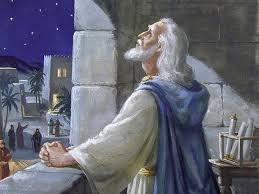 If you want to be a faithful priest to God in this area of intercession, you must first acknowledge your total inadequacy. Hence, you must be totally dependent on Christ and the Holy Spirit to do this great work of God.
 Stephen Nielsen