Peter is Given a Lesson On Forgiveness

Matthew 18:21-22

Then Peter came and said to Him, “Lord, how often shall my brother sin against me and I forgive him? Up to seven times?” 22 Jesus said to him, “I do not say to you, up to seven times, but up to seventy times seven.

Jesus had just been teaching on what to do when a brother sins against us (vv. 15-20). I suppose in this short text, Peter wanted to contribute something on this subject. He may have thought he was being quite brilliant by saying that we should forgive a person who sins against us up to seven times. But Jesus wouldn’t play Peter’s game. Jesus could have praised Peter for his words, yet He wanted him to know that there is to be no limit to forgiveness (seventy times seven or 144 may indicate an infinite number). This teaching, very soon, would be quite beneficial for Peter, as he would definitely need to be forgiven by Jesus for his denials.

Peter Was Allowed to Pay Taxes Through a Miracle

Matthew 17:24-27

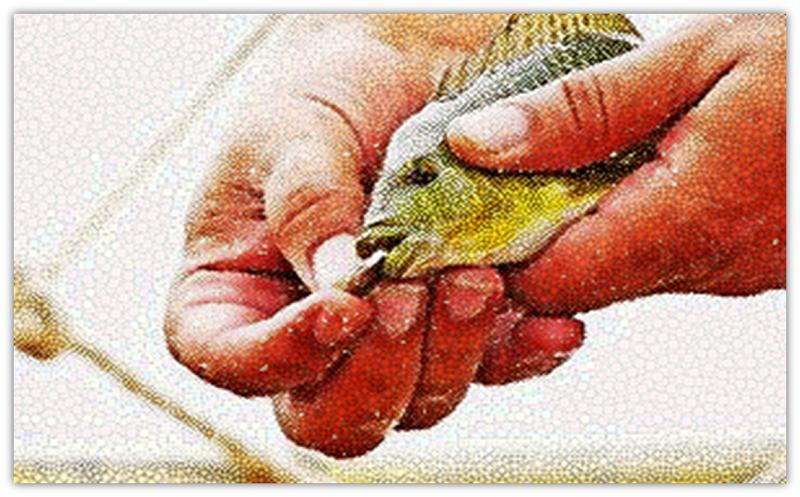
When they came to Capernaum, those who collected the two-drachma tax came to Peter and said, “Does your teacher not pay the two-drachma tax?” 25 He said, “Yes.” And when he came into the house, Jesus spoke to him first, saying, “What do you think, Simon? From whom do the kings of the earth collect customs or poll-tax, from their sons or from strangers?”  26 When Peter said, “From strangers,” Jesus said to him, “Then the sons are exempt.  27 “However, so that we do not offend them, go to the sea and throw in a hook, and take the first fish that comes up; and when you open its mouth, you will find a shekel. Take that and give it to them for you and Me.”

This event having to do with paying a temple tax was not mentioned at all in the other three gospels. But I think, since Matthew had experience in collecting taxes, he was naturally drawn to this incident. He must have been particularly intrigued by how Jesus responded.

Here Jesus brings Peter into the spotlight, both in a teaching setting and also to see how He would miraculously provide the tax. Notice that Jesus, being God’s Son didn’t think that He should have to pay any tax; but, on the other hand He didn’t want to make a big deal out of it or get into an argument over it. So, nevertheless, He decided just to pay it.

But how He paid it was quite interesting. I personally think that He was in a playful mood and wanted to show Peter a display of His power, and that He was Lord over all of creation, even over every fish in the sea. He decided that the first fish Peter caught would be that fish that would provide the tax. 

Peter and the Transformation

Luke 9:28-36 (also Matt. 17:1-13; Mk. 9:2-13)

 Some eight days after these sayings, He took along Peter and John and James, and went up on the mountain to pray. 29 And while He was praying, the appearance of His face became different, and His clothing became white and gleaming. 30 And behold, two men were talking with Him; and they were Moses and Elijah, 31 who, appearing in glory, were speaking of His departure which He was about to accomplish at Jerusalem. 32 Now Peter and his companions had been overcome with sleep; but when they were fully awake, they saw His glory and the two men standing with Him. 33 And as these were leaving Him, Peter said to Jesus, “Master, it is good for us to be here; let us make three tabernacles: one for You, and one for Moses, and one for Elijah” — not realizing what he was saying. 34 While he was saying this, a cloud formed and began to overshadow them; and they were afraid as they entered the cloud. 35 Then a voice came out of the cloud, saying, “This is My Son, My Chosen One; listen to Him!” 36 And when the voice had spoken, Jesus was found alone. And they kept silent, and reported to no one in those days any of the things which they had seen.

It is interesting that just eight days after Jesus rebuked Peter and said to him, “Get behind me, Satan,” He called Peter (and James and John) to come up to this mountain to pray and to see a wonderful transformation. He held no grudges against the misinformed disciple.

Note that there are a few differences in the gospels of Matthew and Mark: 1) The other gospels say that this event occurred six days later instead of eight; 2) the other gospels did not mention prayer as the purpose of their journey; 3) the other gospels gave slightly different accounts of the transformation; 4) both Matthew and Mark failed to mention that the three men fell asleep (presumably while they were praying) and didn’t fully awaken until the transformation. (I wonder how much of it they missed.)

As for Peter’s responses to this great event; as I stated, he fell asleep and missed part of it. And his mentioning of building three tabernacles is, I suppose, partly a result of his sleepiness, because the text says that he did not realize what he was saying. I think God’s voice out of the cloud did more than anything to bring Peter and his mates to thinking more clearly, and, from then on, to listen more to Jesus. 

Peter is Corrected by Jesus

Matthew 16:21-23 (also Mk. 8:31-9:1; Lk. 9:22-27)

21 From that time Jesus began to show His disciples that He must go to Jerusalem, and suffer many things from the elders and chief priests and scribes, and be killed, and be raised up on the third day. 22 Peter took Him aside and began to rebuke Him, saying, “God forbid it, Lord! This shall never happen to You.” 23 But He turned and said to Peter, “Get behind Me, Satan! You are a stumbling block to Me; for you are not setting your mind on God’s interests, but man’s.”

When Peter revealed who Jesus was—that He was the Messiah, Jesus was quick to warn Peter and the disciples not to tell this to anyone (v. 20). He wanted them to know that it was not His time to be exalted, but rather to suffer and die. It appeared that Peter didn’t like this at all; and he didn’t like that Jesus was saying it. In fact, Peter thought that Jesus was misguided in thinking it, that He ought to think more positively—kinglier, or more like “the Son of the living God” (v. 16).

But Jesus knew immediately that Peter was being influenced by Satan. And He, even for His own sake, had to cut off these wrong, Satanic ideas. It was soon time for Him to suffer and die; and he had to be prepared for it. And Peter and the disciples had to be prepared for it too.

Peter Knew Who Jesus Was

Matthew 16:13-20 (also Mk. 8:27-30; Lk. 9:18-21)

13 Now when Jesus came into the district of Caesarea Philippi, He was asking His disciples, “Who do people say that the Son of Man is?”  14 And they said, “Some say John the Baptist; and others, Elijah; but still others, Jeremiah, or one of the prophets.” 15 He said to them, “But who do you say that I am?”  16 Simon Peter answered, “You are the Christ, the Son of the living God.” 17 And Jesus said to him, “Blessed are you, Simon Barjona, because flesh and blood did not reveal this to you, but My Father who is in heaven.  18 “I also say to you that you are Peter, and upon this rock I will build My church; and the gates of Hades will not overpower it.  19 “I will give you the keys of the kingdom of heaven; and whatever you bind on earth shall have been bound in heaven, and whatever you loose on earth shall have been loosed in heaven.”  20 Then He warned the disciples that they should tell no one that He was the Christ.

It is interesting that most people identified Jesus with other great leaders like John the Baptist, Elijah, and Jeremiah. It seems that no one saw Him for who He really was. Only Peter knew that He was the Messiah— “the Christ.” And Jesus told him that he didn’t figure it out on his own; His Father revealed it to him.

This revelation is similar to what Jesus said in John 6:65, that no one can come to Him (and believe in Him) unless it has been granted him from the Father. At that time when everyone was rejecting Him because of the claims He was making about Himself, it seems that only Peter and the other apostles believed in Him. I think they at that time knew that He was the Messiah; but here in this statement Peter is confirming that he knew who He was.

Now starting in verse eighteen Jesus makes four statements about Peter and about his future.

  1. “You are Peter.” Peter’s name, Petros, means a small stone.
  2. “And upon this rock, I will build My church.” Rock here is Petra. It means a larger foundation stone. We know from Scripture that Christ is the head of the church (Eph. 5:23), and He is the cornerstone of the church (1 Pt. 2:6-7). But I think Jesus is telling Peter that, though he is a small stone, he will play a big part, in his leadership, in establishing the church—which is the larger stone.
  3. “And the gates of hades will not overpower it.” Hades (or death) will have no power over the church. This statement I think was meant to encourage Peter in his leadership role.
  4. “I will give you the keys of the kingdom of heaven, and whatever you bind on earth shall have been bound in heaven, and whatever you loose on earth shall have been loosed in heaven.”  In this statement Jesus gives Peter great authority. But in John 20:23 we see that this authority is not given only to Peter, but will be extended to all the apostles. Later this authority will also be extended to church leaders, even now (Matt. 18:18-19); but it is given only according to the Word of God and according to His will. 

Peter Declares His Loyalty To Jesus

John 6:66-69

66 As a result of this many of His disciples withdrew and were not walking with Him anymore. 67 So Jesus said to the twelve, “You do not want to go away also, do you?”  68 Simon Peter answered Him, “Lord, to whom shall we go? You have words of eternal life. 69 “We have believed and have come to know that You are the Holy One of God.”

The morning after Jesus walked on water, heading toward Capernaum, the crowd of people (the 5000 that Jesus fed) wondered where he was. Some of them took boats and went across the lake and found Him there. They wondered how He got there without a boat. Jesus knew that they came to Him to be fed by Him again. Then He began telling them that God would give them bread from heaven and satisfy them forever. He also told them that He was the bread of life from heaven and that if anyone partakes of Him will live forever. When Jesus was saying these things many of the people began to grumble. Some just plain did not believe Him. Others didn’t understand what He was saying; especially when He told them that in order to have eternal life they had to eat His flesh and drink His blood. And He told them that no one could come to Him (believe in Him) unless the Father allowed it. So, this is why so many deserted Him—even many of his disciples.

But, as our text indicates, when Jesus asked if His twelve would desert Him too, Peter spoke up for them and assure Him that they would remain with Him. Why? Peter gave these reasons:

  1. They knew of no one else to believe in.
  2. Because He has the words of eternal life.
  3. They have believed in Him.
  4. They have come to know that He is “the Holy One of God.”

These words of Peter’s were genuine and heartfelt. We can’t judge whether Peter or the others at this time were true believers or not—or whether they understood everything He said.  All we know is that they were compelled to stay with Him.

Peter Walks On Water

Matthew 14:22-32 (also Mk. 6:45-56; Jn. 6:15-21)

22 Immediately He made the disciples get into the boat and go ahead of Him to the other side, while He sent the crowds away. 23 After He had sent the crowds away, He went up on the mountain by Himself to pray; and when it was evening, He was there alone. 24 But the boat was already a long distance from the land, battered by the waves; for the wind was contrary. 25 And in the fourth watch of the night He came to them, walking on the sea. 26 When the disciples saw Him walking on the sea, they were terrified, and said, “It is a ghost!” And they cried out in fear. 27 But immediately Jesus spoke to them, saying, “Take courage, it is I; do not be afraid.”

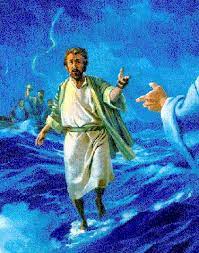
28 Peter said to Him, “Lord, if it is You, command me to come to You on the water.” 29 And He said, “Come!” And Peter got out of the boat, and walked on the water and came toward Jesus. 30 But seeing the wind, he became frightened, and beginning to sink, he cried out, “Lord, save me!” 31 Immediately Jesus stretched out His hand and took hold of him, and said to him, “You of little faith, why did you doubt?”  32 When they got into the boat, the wind stopped.

This incident happened just after the feeding of the 5,000. We don’t know exactly why Peter wanted to walk on the water to Jesus, but we can make some possible guesses. 1) He wanted to make sure it was Jesus and not a ghost. 2) He wanted to experience the miraculous power of walking on the water as He saw Jesus doing; he wanted to be like Jesus; to share His power. 3) He wanted to test his own faith.

In this experiment that Peter put on himself, he found that his faith wasn’t as strong as was required. When he saw the wind he lost his faith and began to sink. Fortunately, he had enough faith to call out to Jesus for help. And then Jesus told him why he did not make it all the way to Him; because he doubted. When he saw the wind and the waves he lost his faith (read James 1:6-8).

We may notice that Jesus did not rebuke Peter for wanting to walk out to Him. In fact, I think Jesus welcomed his desire to want to do it. But it seems that Jesus was disappointed in his lack of faith. I think He wished that he would have made it all the way to Him—just as a father wants to see his child take his first steps toward him and walk all the way to him into his arms.

The Three Closest Disciples

Luke 8:51

 51 When He came to the house, He did not allow anyone to enter with Him, except Peter and John and James, and the girl’s father and mother.

Here is when Jesus went to Jairus’ house (a synagogue ruler) to heal his twelve-year-old daughter; and only Peter, with James and John were allowed by Jesus to enter her room and witness the healing. This is an indication that these three were the closest disciples—those Jesus trusted most.

Peter Was the Spokesman

Luke 8:43-46 (also Matt. 9:18-26; Mk. 5:21-24)

43 And a woman who had a hemorrhage for twelve years, and could not be healed by anyone, 44 came up behind Him and touched the fringe of His cloak, and immediately her hemorrhage stopped. 45 And Jesus said, “Who is the one who touched Me?” And while they were all denying it, Peter said, “Master, the people are crowding and pressing in on You.” 46 But Jesus said, “Someone did touch Me, for I was aware that power had gone out of Me.” 

This story is recorded in both Matthew’s gospel (Matt. 9:20-22) and Mark’s gospel (Mk. 5:25-34), but only here in Luke’s gospel was it indicated that Peter was the central person who said to Jesus, “Master, the people are crowding and pressing in on You.”

So, it seems that Peter was speaking for all the disciples. He was the spokesman. And also, when Jesus said, “Someone did touch Me, for I was aware that power had gone out of Me,” He was speaking mainly, or more directly to Peter. Hence, I think Peter was getting Jesus’ response more than the others.

Jesus Chose His Disciples, Peter was First

Luke 6:12-16 (also Mk. 3:13-19)

12 It was at this time that He went off to the mountain to pray, and He spent the whole night in prayer to God. 13 And when day came, He called His disciples to Him and chose twelve of them, whom He also named as apostles: 14 Simon, whom He also named Peter, and Andrew his brother; and James and John; and Philip and Bartholomew; 15 and Matthew and Thomas; James the son of Alphaeus, and Simon who was called the Zealot; 16 Judas the son of James, and Judas Iscariot, who became a traitor.

Here we may note that Peter is named first. And in Matthew 10:2 it even says, “The first, Simon…” Moreover, in the list of apostles in Mark 3:16-19 and in Acts 1:13, Peter is listed first. Hence, not only does Peter always act as the leader, he is pointed out in Scripture (which is inspired by God) as the appointed leader.