
So teach us to number our days,
That we may present to You a heart of wisdom (Ps. 90:12).
God teaches us to use our time wisely, so that we may grow in wisdom.

So teach us to number our days,
That we may present to You a heart of wisdom (Ps. 90:12).
God teaches us to use our time wisely, so that we may grow in wisdom.

I don’t know if we can be exact about when all the judgments will occur; but, according to most bible prophecy scholars, the seal judgments will occur roughly during the first twenty-one months of the Tribulation, the trumpet judgments during the second twenty-one months, and the bowl judgments during the entire second half of the Tribulation, for forty-two months or three and a half years. In the first half of the Tribulation (with the seals and trumpets) the earth will experience the wrath of the Antichrist, along with the harlot (or the false church); and in the second half of the Tribulation, known as the Great Tribulation, the earth and its people will experience the wrath of the Almighty God.
I don’t think it is super important to try to fit everything exactly into its proper place—nor can we; but, I think, to at least guess at it, we may get a better understanding of how things will fit together, especially during the time of the middle of the Tribulation and leading up to the bowl judgments.
The way I see it, there are two categories of time; events at the mid-Trib, and events a little later, leading up to the bowl judgments.
Events at the Middle of the Tribulation
1. The Antichrist is resurrected (Rev. 13:3). After this seemingly miraculous event, the Scripture says, “The whole earth was amazed and followed after the beast.”
2. The Antichrist breaks his peace covenant with Israel and puts a stop to animal sacrifices and grain offerings in the Jewish temple (Dan. 9:27). Notice that he does this in the middle of the week (meaning the seven-year covenant).
3. He exalts himself, and others exalt him, as God (2 Thess. 2:3b-4; Rev. 13:3b-4). In 2 Thessalonians we read, “The man of lawlessness is revealed, the son of destruction, who opposes and exalts himself above every so-called god or object of worship, so that he takes his seat in the temple of God, displaying himself as being God.” Then in Revelation it is written, “And the whole earth was amazed and followed after the beast; they worshiped the dragon because he gave his authority to the beast; and they worshiped the beast, saying, ‘Who is like the beast, and who is able to war with him?’”
These three points will mark the exact time at the middle of the Tribulation. And this is the time when scholars believe that Satan fills and empowers the Antichrist so that he believes himself to be God and the resurrected Christ. Hence, it is at this time that he begins to speak so arrogantly against God and against believers and makes war with them (Rev. 13:5-7).
A Few Days or Weeks Later
We cannot be sure how long it will take the following events to transpire, but it seems logical that it will take at least a few days to a few weeks—but probably not longer than that.
4. The Antichrist destroys the harlot (Rev. 17:16-17). The harlot (the false church) will reign together with the Antichrist during the first half of the Tribulation (Rev. 17). But when he is fully controlled by Satan and thinks that he alone is God, he no longer will tolerate the harlot; and he, along with his ten kings will hate her and make her “desolate.” Now we don’t know how long it will take to destroy her, but I imagine that with just a strike of the pen, with an executive order, he will do it.
5. He will make war with all true believers (Rev. 13:7). Besides the false believers of the false church, He will also, and more, go against the true believers. In fact, he will hunt them down and kill them—all who are destined to be martyred (read Rev. 13:10).
6. The image of the Antichrist is made and set up (Rev. 13:14-15). We don’t know how long it will take for those “who dwell on the earth” to make this image and to make it speak, but I am guessing that it will take some time. However, the way advanced technology will be, it may not be long.
7. Many Jews flee to safety into the wilderness (Rev. 12:14; Matt. 24:15-21). We know exactly when these Jews—as many as decide to go—will begin fleeing for safety into the wilderness. It will be, as Matthew 24:15 indicates, when they see the Abomination of Desolation standing in the temple. This, I think, is the image of the beast (I won’t go into more details as I have already written on it on pages 155-157).
8. All people are required to take the mark of the beast (Rev. 13:16-18). These verses (vs. 16-18) explain it quite well. Everyone, no matter how old, how wealthy, or what status, will be required to take the mark; which is a mark representing the Antichrist. It will be the government’s system to control people. And if you want to buy or sell anything you must have the mark.
But we know that there will be many who refuse to take the mark. All true believers will not take the mark; for it is a sign of the Antichrist and for those who worship Him (Rev. 14:9-10). And since all who take the mark will suffer the wrath of God (hell), we can be certain that believers will not receive it, nor will they be force to get it, or be tricked into getting it. However, we know that God will somehow provide for them; He will provide for any believer that is destined to live during that time.
Now one of the reasons I decided to do this timeline is to give us an idea as to when the bowl judgments will begin; because the first bowl is a judgment on those who received the mark and who worship his image. For that reason, the first bowl will not commence until after the image is set up.
However, in saying that, I think we can be certain that even though there is a gap of time between the mid-Trib and the first bowl, there still will be plenty of Tribulation-suffering going on in that short gap of time.

Seek wisdom from God and He will make your paths straight.
Proverbs 3:6
In all your ways acknowledge Him,
And He will make your paths straight.
7 Do not be wise in your own eyes;
Fear the Lord and turn away from evil.
NASU
 Jesus taught that prayer must be with forgiveness (Matthew 5:23, 24; 6:14-15; Mark 11:25-26)
 In these passages Jesus seems to be teaching us that if we have not forgiven someone we may as well not pray at all. Mark 11:26 says, “If you do not forgive, neither will your Father in heaven forgive your trespasses.”
Jesus is not saying here that if you don’t forgive others you have lost your salvation; but He is saying that in your unwillingness to forgive someone you have cut off your fellowship with God. Why? Because in your sin against others (in not forgiving them) you sin against God too. Sin always separates us from God, and so this is why when we sin He will not regard our prayers (Ps. 66:18, Jn. 9:31).
Now we know that there are many different kinds of sin, and all of them, if unconfessed will separate us…
View original post 191 more words

I saw in heaven another great and marvelous sign: seven angels with the seven last plagues — last, because with them God’s wrath is completed. 2 And I saw what looked like a sea of glass mixed with fire and, standing beside the sea, those who had been victorious over the beast and his image and over the number of his name.
Here, as John sees the last plagues coming (v. 1)—which will finish the wrath of God—he then sees the victorious ones in heaven, rejoicing in their victory over the beast and in the greatness of God.
They will sing the song of Moses (Ex. 15:1-21), which the people of Israel sang after they passed through the Red Sea; and they will also sing the song of the Lamb (Rev. 5:8-14), which is their rejoicing in the blood of Christ to redeem them from sin.
Verses 3 and 4, I think, is a short condensation of the song of Moses and the Lamb, and is the high points of what will be their worship to God and to the Lamb. In these verses they extol His greatness and holiness and sing of His future millennial reign in the new kingdom when “all the nations will come and worship before [Him].”
They held harps given them by God 3 and sang the song of Moses the servant of God and the song of the Lamb:
“Great and marvelous are your deeds,
Lord God Almighty.
Just and true are your ways,
King of the ages.
4 Who will not fear you, O Lord,
and bring glory to your name?
For you alone are holy.
All nations will come
and worship before you,
for your righteous acts have been revealed.”
 Jesus taught that prayer must be with faith (Matthew 21:21-22; Mark 11:22-26)
 In theses verses I see three aspects of faith in prayer that Jesus teaches. First of all…
(1) Faith must be in God. Matthew 21:22 says, “Have faith in God.” Prayer with faith, therefore, is prayer that believes in God and in the promises that He has given us. Then it is prayer that expects God to answer based on those promises; it is prayer that has a continuing hope for the answer and a lasting energy to pray until the answer comes. Secondly…
(2) Faith must be with obedience. Prayer with faith is prayer that doesn’t just pray and then believe that God will do it by Himself without us; it is prayer that counts on God to help usdo it; it is prayer that stops praying and starts obeying.
In Mark 11:23 Jesus…
View original post 268 more words
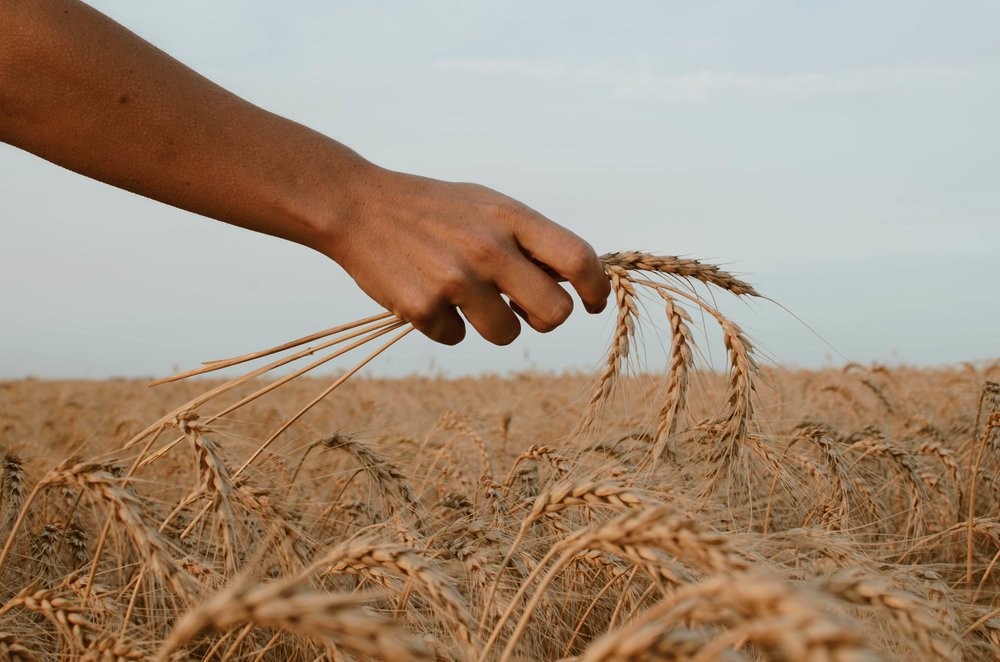
The harvest of the earth speaks of the great judgment of God upon all unbelievers, which occurs at the very end of the Tribulation. We will look at the entire passage and then break it down into three points.
Revelation 14:14-20. Then I looked, and behold, a white cloud, and sitting on the cloud was one like a son of man, having a golden crown on His head and a sharp sickle in His hand. 15 And another angel came out of the temple, crying out with a loud voice to Him who sat on the cloud, “Put in your sickle and reap, for the hour to reap has come, because the harvest of the earth is ripe.” 16 Then He who sat on the cloud swung His sickle over the earth, and the earth was reaped.
17 And another angel came out of the temple which is in heaven, and he also had a sharp sickle. 18 Then another angel, the one who has power over fire, came out from the altar; and he called with a loud voice to him who had the sharp sickle, saying, “Put in your sharp sickle and gather the clusters from the vine of the earth, because her grapes are ripe.” 19 So the angel swung his sickle to the earth and gathered the clusters from the vine of the earth, and threw them into the great wine press of the wrath of God. 20 And the wine press was trodden outside the city, and blood came out from the wine press, up to the horses’ bridles, for a distance of two hundred miles.
The Executioners
There will be two executioners: Jesus Christ and special designated angels. Jesus Christ is seen by John as “a son of man having a golden crown on His head and a sharp sickle in His hand.” This imagery, especially the golden crown on His head, shows us vividly that Christ is victorious in battle; and even before the battle is over, we know that He will conquer His enemies.
His special angels helping Him also have sharp sickles (deadly weapons), and they will be working to gather all the sinners into the great wine press of God (the wrath of God).
The Harvest Will Be Ripe
The harvest in this passage is first of grain (vs 14-16), and then of grapes (17-20). In the first group of verses I think the harvest of grain is dealing with the separation of the tares from the good grain, or the unbelievers from the believers (This is explained for us in Matthew 13:39-43). We can’t be sure exactly when or how this will occur, but I think it will occur sometime before Armageddon—which is what is described in verses 17 through 20.
So, as for this second passage, where the imagery is clearly of the harvest of grapes, the separation has already occurred, and all of the unbelieving people left (represented as grapes) are harvested (judged); they are all ripe and are cast into the great wine press.
Notice that in both cases—the harvest of grain (the separation) and the harvest of grapes—the timing is exactly right. Hence, as the writer of Ecclesiastes puts it, “There is an appointed time for everything” (Ecc. 3:1). And in this case, the time for God’s judgment on unbelievers has come. He has waited patiently for people to repent and come to Him. But there will be an appointed time when His patience runs out and His judgment begins. At that time nothing can be done to delay His time of judgment.
The Great Wine Press
The great wine press is the slaughter of all unbelievers like the pressing of grapes. The writing here portrays all those who will come to the great battle ground in Israel. As is described in the sixth bowl (Rev. 16:13-16), they (hundreds of millions) will be drawn to this place of battle: mainly in Armageddon, but I think in most of the land of Israel, by demons which will come out of the mouths of the dragon, the beast, and the false prophet; these three will demonically convince the world to come and fight. And so, they will be led by demons to this great battle. But they will come to be slaughtered by the angels of God and Christ Himself. They will be slaughtered by the sword, and their blood will be as deep as the horses’ bridles—as it flows for 200 miles from Armageddon in the North to Edom in the south.
Now these who gather, at least most of them, I think, are military men (armies). But what of the civilian unbelievers. I assume that they will be judged too—wherever they may be located. None will escape the sword of God’s wrath. All will die because of their rebellious unbelief. As the seventh bowl judgment describes, some will die by a great earthquake, and some will die by huge hail stones, and I imagine that some will die merely out of fear—the fear of His judgment. In the end there will be no unbelievers left. All will die.
 Jesus taught that prayer should be in unity with others (Matthew 18:19-20)
 Sometimes when we pray we are not in unity and in agreement with others. But we should always strive for unity—that is, unity in the body of Christ. We can never have unity and agreement with those outside of the body of Christ, but we should always strive for unity within the body. For the body of Christ is one, of which we are all part. Therefore, since each of us (in the Christian church) is a part for the body of Christ it is natural that our prayers should be united and flow together in agreement by the power of the Holy Spirit.
At first it was hard for me to find in the gospels where Jesus taught this idea of unity in prayer (other then in Matthew 18:19-20); but then, as I studied it, it…
View original post 332 more words

In addition to the constant preaching all over the world by the 144,000 Jewish evangelists during the Tribulation, God will send His angels to warn the world of what is coming in the last three and one-half years of the Tribulation. We don’t know to what extent the angels will be active in this warning ministry, but here in these verses is what John saw and heard.
Revelation 14:6-7. And I saw another angel flying in midheaven, having an eternal gospel to preach to those who live on the earth, and to every nation and tribe and tongue and people; 7 and he said with a loud voice, “Fear God, and give Him glory, because the hour of His judgment has come; worship Him who made the heaven and the earth and sea and springs of waters.”
Here John saw something incredible: an angel flying across the sky preaching the eternal gospel to all the world. We don’t know how he will do it, but he will. Perhaps it will be broadcast over the internet or TV so that all will see and hear it. That is my guess. Or perhaps this one angel will have others helping him. At any rate, we know that all the world will hear this eternal gospel.
Now this gospel will not merely be presented; it will be preached with a stern warning that they must repent and believe now because God’s judgment is coming. I think it will be much like the preaching of John the Baptist.
Verse 8. And another angel, a second one, followed, saying, “Fallen, fallen is Babylon the great, she who has made all the nations drink of the wine of the passion of her immorality.”
This is not only a warning but a declaration that the evil, idolatrous and immoral system of Babylon will certainly be destroyed. Its destruction will begin at about the midpoint of the Tribulation, when the Antichrist himself along with his ten kings will make desolate the harlot (the false religious system) because of his hatred for her. He will be envious of her power and will want all power for himself (read Rev. 17:16-17).
The climax of Babylon’s fall will be toward the end of the Tribulation, when Rome, the future capital city of the world and of the Antichrist falls and is burned up, along with all of its riches and power (Rev. 17 and 18). Some may disagree with Rome being that city and say that it is the actual rebuilt city of Babylon. However, as I have stated in my book, After the Rapture, after the ancient city of Babylon was destroyed in 539 B. C., the high priest, along with the entire Babylonian system moved to safety and settled in Rome. There they merged their evil beliefs and idols with the Roman Emperors as well as with the Catholic Church. Hence, the city of Rome essentially has become Babylon.
Verses 9-11. Then another angel, a third one, followed them, saying with a loud voice, “If anyone worships the beast and his image, and receives a mark on his forehead or on his hand, 10 he also will drink of the wine of the wrath of God, which is mixed in full strength in the cup of His anger; and he will be tormented with fire and brimstone in the presence of the holy angels and in the presence of the Lamb. 11 “And the smoke of their torment goes up forever and ever; they have no rest day and night, those who worship the beast and his image, and whoever receives the mark of his name.”
Here, with this angel’s message is the final and ultimate warning. The first massage was to fear God and give Him glory, and thus to repent and be saved. The second message is that there is no hope for the Antichrist’s kingdom—that it is fallen and will be no more. This third message and stern warning is that if anyone decides to follow the Antichrist—to worship Him and receive him mark—they will suffer the wrath of God forever.
Now let me mention just a couple of things from this passage. The first is that because of the strength and clarity of the message, no one will be able to plead ignorance at and during their judgment. They will not have any way out. Secondly, it is clear here that all those who receive the mark will also worship the beast. The two go together. That is, no one can say I received the mark but I do not worship him. Thirdly, it is very clear here what hell will be like; hence, no one can say that they weren’t aware of the reality and severity of the judgment. Here are three distinctives of hell:
1. Hell will be to experience the wrath of God forever, which is the full strength of His anger.
2. Hell is being tormented with fire and brimstone in the presence of the holy angels and the Lamb of God.
3. Hell is to have no rest day and night. To me, this means to have no peace, no contentment, and no satisfaction of life. It will be a continual experience of pain and anxiety without a rest break.
 Jesus taught that prayer must be in His name (John 14:12-14; 15:7, 16; 16:23, 24).
 In these verses Jesus teaches clearly that if we expect to receive what we ask for we must ask for those things in His name. What does that mean? Well, in the first passage (Jn. 14:10-14), Jesus shows us that praying in His name is praying in oneness or in unity with Him—that just as Jesus is one with the Father, we demonstrate that we are one with Jesus (and the Father) when we pray in His name. For when Jesus ascended to the Father, the Holy Spirit came to us and united us with the Father and Son. And so when we pray in His name we demonstrate our oneness with Him, because we pray in unity with the Son who is one with the Father. And we do it by the Spirit. Then…
View original post 628 more words


