I sometimes wonder how some people can be so insensitive to sin, without a bit of guilt or remorse. I’m thinking about those who do sin for a living and think nothing of it. They seem to thrive in it, and the gospel has no effect on them.
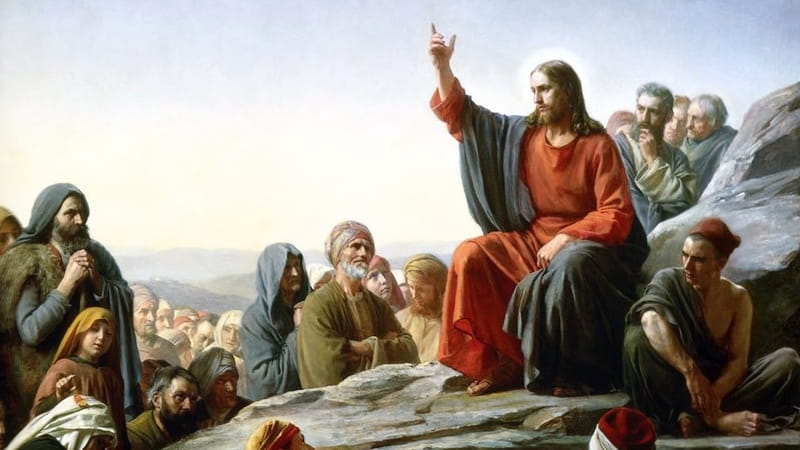
I’ve been reading The Gospel According to Jesus, by John MacArthur. He has some very good incites on the parable of the soils from Matthew 13:3-9.
And He spoke many things to them in parables, saying, “Behold, the sower went out to sow; 4 and as he sowed, some seeds fell beside the road, and the birds came and ate them up. 5 “And others fell upon the rocky places, where they did not have much soil; and immediately they sprang up, because they had no depth of soil. 6 “But when the sun had risen, they were scorched; and because they had no root, they withered away. 7 “And others fell among the thorns, and the thorns came up and choked them out. 8 “And others fell on the good soil, and yielded a crop, some a hundredfold, some sixty, and some thirty. 9 “He who has ears, let him hear.”
First we need to explain that the seed represents the Word of God and the gospel; the sower is one who presents the gospel to the unbeliever; the soil is the human heart—or the people; and the birds that ate the seed is Satan.
The purpose of sowing the seed is to build the kingdom of God—to save souls for His kingdom. In the parable, Jesus describes four kinds of soils (or four kinds of people) that the seed falls on. The first three described (vs. 4-7) is soil that is not prepared correctly for the seed of the gospel to germinate. These people will not be saved. Only the fourth kind of soil—good, fertile soil—will respond to the gospel and be saved.
In this blog we will focus on the first soil mentioned (v. 4). The sower went out to sow; and as he sowed, some of the seeds fell beside the road, and the birds came and ate them up.
This first soil is soil that is hard-packed. It is soil that is on a path that has been packed down by people constantly walking on it. The seed that lands on this path, as you can imagine, has no chance of taking root. The hard-packed soil represents people with a hard heart. Like the hard-packed soil, their heart is hard. It has been hardened by repeated sin and abuse. The Old Testament called these people “stiff-necked.” Their repeated sins and rebellion against God has made them what they are: unresponsive to the gospel (and the Word of God), unconcerned, indifferent, even hostile to the gospel. These are definitely unsaved people; because a believer will commit sins and even be rebellious, but he will not stay that way. The Holy Spirit will cause him to repent and he will be delivered.
Hence, this parable is directed to unsaved people. They need a heart change. The soil of their heart needs conditioning. The hard-hearted person has no chance of being saved unless his heart is softened. How?
By prayer and by the Word of God and by love from a kind friend.
It is a sad thing to see this person; they have no understanding of the gospel and no sorrow over their sin, because the devil has plucked all the seeds of the gospel away. They seem to be so oblivious to sin, to living a sinful life. These are the ones who march for Pride month; these are the ones who fight for abortion rights; these are the ones who sell themselves to pornography and also the ones who love viewing it; these are the ones who have no understanding of the truth and the Word of God and will call Christians and conservatives extremists. They fight for global government and for the climate change movement. Most of them will not repent and be saved. Much prayer is needed for the few who will be saved.
I have just finished writing my latest book, THE TRIBULATION. I think it is my best book and I hope you will consider getting it. It is available now at my Lulu website:https://www.lulu.com/spotlight/lordteachustopray/
As I have noted on the book description,
This is not a book on all the personal tribulations/trials we may go through [now]. It is on the seven-year Tribulation written about in the book of Revelation, and also in the Old Testament prophetical books. The Tribulation is a product of my study of Scripture, and also from a few other bible scholars whom I trust. As to its content, about half of the book introduces the Tribulation, giving important information as to it setting, its purpose, and its nature. Then in the second half, the judgments (the seals, the trumpets, and the bowls) are expounded on, and each Tribulation event is highlighted. I’m sure that this book will serve you well in your understanding of The Tribulation as it is given to us in the Scriptures.
Beware of the AI-Bible and the AI-Jesus. They are the newest thing in our global world. I am afraid that young people will be drawn to it—because it will give them just what they want.
The Ai-bible is mostly our bible with additions and subtractions; subtractions that will take away the things that they don’t want, and additions that add things that are new and more up-to-date.
The AI-Jesus is more of a robot Jesus that will point people to the AI-Bible. He (it) will be a new Jesus created by man in our image. So, he will be just what we want—what makes us happy. Each person can have his own AI-Jesus and he will point us to the truth(?)—our own truth.
I say beware of these things because of what the Bible says in Revelation 22:18-19:
I warn everyone who hears the words of the prophecy of this book: If anyone adds anything to them, God will add to him the plagues described in this book. 19 And if anyone takes words away from this book of prophecy, God will take away from him his share in the tree of life and in the holy city, which are described in this book.
In reference to AI-Jesus, Jesus has warned us of it in Matthew 24:5:
For many will come in my name, claiming, ‘I am the Christ,’ and will deceive many.
I am sure that this AI-Jesus is just one version of all that will come in Jesus’ name, but it is a big one. Beware!
In the last one-hundred years there has been an effort to divide Christians into two groups: carnal and spiritual (Read 1 Cor. 2:14-3:3). And they have likewise said that many have received Christ as Savior, but not as Lord. They would be the carnal ones. They would be saved but not really committed to Christ.
And surprisingly, some have been okay with this, because they say that if they accept Him as Lord they would be guilty of human works.
But this is crazy, because that would be dividing Christ. For He is both Savior and Lord. And so, when we seek to be saved we must accept all of Him, in all that He is—Savior and Lord. He must be our Savior and our Lord. If He is not, we really haven’t accepted Him (the real Him) at all.
And, as far as being guilty of “human works,” Jesus tells us that true faith requires works (James 2:14-26); that without works faith is dead. And works is not something we do without His help. He is the worker in us. When we are saved He gives us a new life, a life that naturally does the work of God.
And by the way, if you are called a carnal Christian, you may not be a Christian at all. Because carnality is not of God. A carnal person is a person void of spirituality, or void of the Holy Spirit. So here it is: a carnal person is a pagan, not a Christian; and a Spiritual person is a Christian, because he walks by the Spirit and he does the works of God (Romans 8:9-11).
However, there will be periods in the Christian’s life when he takes the wrong road or gets off track. But that will be only temporary. God provides for him a way to get back on track—he will just need to repent of his sins and start again. And this will happen many times because we are still in our fleshly body. And God understands this—and so should we. But we endeavor to abide with Him from day to day failing along the way, but getting back up again and again. And thank God that He has provided for us constant forgiveness and cleansing (1 Jn 1:9).
We depend on His constant forgiveness and cleansing; yet we strive to abide with Him and trust Him more.
This gospel demands our commitment, our obedience, our Lordship, and our turning from sin.
The title of this blog is the title of a book written by John MacArthur, Jr. in 1988. This book, I remember created quite a stir, and it is still having an impact. I have had it on my book shelf for a while and just now decided to read it again more seriously. This time I intend to blog through it.
The theme of the book is getting the true gospel clear—from Jesus’ teaching. It is also to refute the wrong, misguided way of salvation. MacArthur strongly refutes all those who bring “another gospel,” those who “distort the gospel of Christ” (Gal. 1:6-8).
In the first chapter MacArthur confronts all evangelists who have used gospel presentations such as …
“Accept Jesus as personal Savior”
“Ask Jesus into your heart”
“Invite Christ into your life”
“Make a decision for Christ”
MacArthur says that none of this terminology is biblical. And I have to admit that I have used all of it myself! It was how I was taught, how I heard it growing up in the 60’s and 70’s.
MacArthur rightly points out that “the gospel Jesus proclaimed was a call to discipleship, a call to follow Him in submissive obedience, not just a plea to make a decision or pray a prayer.” (p. 21)
Looking back at my own point of salvation, I am thankful that my counselor did it right. He pointed me to the Scriptures and also gave me the idea that conversion was the point where I was deciding to follow Jesus and to allow Him to be in the drivers’ seat.” That I was giving Him control of my life, that I was being submissive to Him, that I was beginning a new life of submission to His will.
But MacArthur points out that many evangelists of today, when they present the gospel, give no invitation to making spiritual commitments whatsoever, or to turn from sin. They insist that this would amount to human works and have nothing to do with faith (p. 22).
So apparently, some say that conversion is just a prayer said, just making a decision for Christ, and then letting Jesus bring that Lordship issue along later. Yes, I remember this being said. But it is wrong. Jesus demands Lordship and commitment from the start. He demands a life of obedience from the start. He says, follow Me!
We must believe that genuine assurance of salvation will come from seeing the Holy Spirit’s transforming work in the life—seeing the fruit. Hence, real salvation cannot be isolated from His work in us. There must be not only justification, but also regeneration and sanctification. Yes, there must be evidence of a holy life.
Hence, we must not dismiss holiness in the life. And we should not only point to a person’s salvation experience. We should not encourage a person to base his salvation assurance on the memory of a prayer, or walking an aisle, or speaking in tongues, or some other experience.
Faith that does not result in a righteous life is dead faith. A real and growing faith must have fruit—the fruit of righteousness, the fruit of the Holy Spirit. A true Christian must be able to look back and see that he has put aside his old life and is growing to be more like Christ, that he is growing to hate the world and to love God and His word. A true Christian loves to go to church and hear the word of God preached, and to sing songs of praise to God with others. A true Christian longs for heaven and to see Jesus; and he hates sin, sin in the world and sin in himself.
Pray for the deliverance of all the nineteen innocent ones, who were only trying to make our elections fair. Pray that they would be safe in the Fathers arms, and safe from all evil. Pray that they would experience God’s wonderful love and protection through it all.
And pray that justice would be done—punishment for the evil ones and mercy for the innocent.
In the last few years nations have been more interested in establishing peace with Israel; more want to be a part of the Abraham peace accord. And now even Saudi Arabia is interested in peace.
What is happening? Surely, these nations are not turning their back on their own Muslim religion in favor of the Jewish religion. They still hate Israel. Yet they want peace. They are tired of war. And they surely don’t want war with Israel.
Also, what is happening is the confirming of biblical prophecy. It is all coming together. According to Ezekiel 38, Israel will soon, and more and more, be a nation where the people are secure, living in safety and a land that has recovered from war, and also a very prosperous and fruitful land (vv. 8, 11,12,14).
And so it is interesting that, as prophesied, the nations closest to and all around Israel are now more peaceful to Israel. But the nations further out from Israel will soon war with Israel. These nations in particular are Russia (or Gog), Iran, Turkey, and a few others. The leader of this group will be Russia. And the reason they will want to go to war with Israel is found in Ezekiel 38:12-13. They will be looking to plunder and steal her land and wealth.
I don’t think I will see all this happen in my life time. I think this (the war of Gog and Magog) will happen sometime after the Rapture. But isn’t it exciting to see things all come together—to see Israel become more secure than ever before; to see the popularity of the Abraham accord—even now with Saudi Arabia.
Christian, our time of Rapture is just around the corner. Keep looking up!
Been thinking about perfection. I always try to be perfect at my job—house painting. And at my publishing—getting things just right. But at other things like house cleaning, I know I am not too perfect at. My driving could use some improvement too.
I’m going through a real tragedy right now. The title of my new book is not perfectly centered. It’s driving me up the wall. And if I want to fix it, it will take two or three weeks for the approval process to go through. Should I fix it or just leave it be imperfect? Will anybody really notice—or care? Probably not, except me. Funny, that’s the same with my painting. If I make a small mistake nobody will notice except me—unless I point it out.
Some people are so meticulous at house cleaning and at the way they look. Everything looks perfect. But those same people might not be so perfect in their thoughts—in their moral purity. For them it’s all a matter of what people see. I think this is true for me too. People will see my book covers and my paint job, but they can’t see my heart. But God sees my heart and He is very concerned about what I think. All my sins are against Him. And that is the greatest tragedy!
How will I clean up my heart, make my heart more perfect? That was the concern and the prayer David had. He knew he had sinned against God and he knew his heart was unclean. So, he prayed for a clean heart (Ps 51).
Only God can clean our heart and make us more perfect, because he is perfect. He is absolutely perfect in every way. And some day—after daily washings—we will be so clean and perfect just like Him. No worries then. All will be right. Perfect.
I haven’t been blogging lately because I have a job going–getting out early and too tired to do anything after work. And the days have been hot and humid. But I don’t want to complain. It’s good to be working, making money. But today, Saturday, I have free and back again.
I have a new book coming out soon–probably in September. The title is THE TRIBULATION. I’m going through the publication process now. I self-publish all my books (with the help of Lulu.com). Please look for it; and also please pray for the process of publishing to go smoothly.







 Stephen Nielsen