This is our fourteenth study. Please click HERE for an intro to this study. Today we see how Jesus turned the tables on the Pharisees—how He tested their weak faith.
Matthew 22:34-46
Hearing that Jesus had silenced the Sadducees, the Pharisees got together. 35 One of them, an expert in the law, tested him with this question: 36 “Teacher, which is the greatest commandment in the Law?”
37 Jesus replied: “‘Love the Lord your God with all your heart and with all your soul and with all your mind.’ 38 This is the first and greatest commandment. 39 And the second is like it: ‘Love your neighbor as yourself.’ 40 All the Law and the Prophets hang on these two commandments.”
41 While the Pharisees were gathered together, Jesus asked them, 42 “What do you think about the Christ? Whose son is he?”
“The son of David,” they replied.
43 He said to them, “How is it then that David, speaking by the Spirit, calls him ‘Lord’? For he says,
44 “‘The Lord said to my Lord:
“Sit at my right hand
until I put your enemies
under your feet.” ‘
45 If then David calls him ‘Lord,’ how can he be his son?” 46 No one could say a word in reply, and from that day on no one dared to ask him any more questions.
Observations
After the Pharisees tried to stump Jesus by asking Him which was the greatest commandment in the Law (and Jesus not only told them which was the greatest, but also the second greatest), He then had a question for them. He asked them whose son was Jesus. They answered correctly: the son of David. He them asked them, why then did David in the Spirit call Him Lord (in Ps. 110:1). It is obvious here that Jesus was pointing out His own deity. But still the Pharisees would not accept it. They understood what He was saying, but they refused to believe that He was the Son of God.
Application
The application for the Pharisees is to believe. The application for us today is the same. We must believe that He is the Son of God—the Lord, our Lord.
Is prayer really necessary? Some people say that prayer is just a type of meditation to make us feel better and to lull us into a false sense of security. Others say that since God is loving and good, He will give us all the things we need and will accomplish His good will whether we pray or not. I suppose most of us who are Christians say, “Yes I believe that prayer is absolutely necessary.” But, by our lack of prayer, don’t we demonstrate that we believe it is not necessary? If we Christians really believed that prayer was necessary there would be prayer groups popping up all over. If we really believed that prayer was necessary people would be eager to go to church; our churches would be packed full, not only on Sunday morning but also at the Wednesday night prayer meeting!
Prayer is indeed necessary, and in the next nine blogs I will give you nine reasons why. Here is the first one.
1. Prayer Is Necessary to Obtain Personal Salvation
The Bible says, “Whosoever will call upon the name of the Lord will be saved” (Romans 10:13). We know that prayer does not save; God saves. But we see from this verse that God has made prayer the avenue through which salvation is granted. He decided that we must call upon Him before He will save us.
Paul tells us in Romans 10:10 that man believes with the heart, but then with the mouth confession is made unto salvation. So believing with the heart is only part of faith—or, I would say, it is only the first step in receiving the gift of true faith from God. To have complete faith, a saving faith, we must believe with the heart and also confess with the mouth. This confession of the mouth, which is prayer, is what activates faith—or brings to life the faith of God He gives us in His Son (Heb. 12:2). Without this confession of prayer our faith would be dead and worthless. But with prayer our faith becomes alive, which results in our salvation. Therefore, prayer is essential for salvation.
What a great privilege God has given us. He has given us the privilege of having a part in our own salvation. That part comes with the decision we must make as to whether we will receive His Son Jesus Christ through prayer or not. If we should choose not to receive Him that is our God given choice, and He will not force us to receive Him. But if we choose to receive Him we can do it through prayer.
Your prayer should sound something like this:
Lord Jesus, I know that I am a sinner. I believe that you died and paid the penalty for my sins. Right now I repent of my sins and I invite you to come into my life. Please come into my life and give me a new life. Lord, help me to get to know you and to trust you. Amen.
Believing prayer then is absolutely necessary. It is what we must engage in to bring us from spiritual death to life in Christ.
“Ask, and it shall be given to you; seek, and you shall find; knock, and it shall be opened to you. 8 “For everyone who asks receives, and he who seeks finds, and to him who knocks it shall be opened.
Here is an absolute promise made by the Son of God. It tells us very directly and strongly that God wants to and will answer our prayers. But there is a right way to ask and a wrong way.
How Not to Ask
1. I think, generally speaking, we should not ask Him to remove our problems from us or take us out of a bad situation. It is always better to ask Him to help us deal with our problems where we are.
2. Never use these verses as a psychological treatment or a way to comfort ourselves. The Lord has given us an absolute promise. If we ask correctly, He will answer us—give us what we need.
3. We must not take verses 7 and 8 out of context. They have a connection to verses 9-11. Verses 7 through 11 all go together.
What to Ask for and How to Ask
1. we should always try to ask for what we think is His will in any given situation. Ask for His wisdom.
2. Ask with persistence. The words ask, seek, and knock indicate persistence and importunity. And if we are truly praying with persistence this attitude will also be a part of our life—we will be persistent and diligent in our work and in our holiness.
3. Ask realizing that God is our Father and that He wants to give us only what is good (verses 9-11).
4. Ask for the Holy Spirit. In the parallel passage in Luke 11:9-13, Luke adds the Holy Spirit (in verse 13). So, whatever we are asking for we ought to include the Holy Spirit. He is the ultimate good thing that the Father offers us. And the Father will never deny us the Holy Spirt.
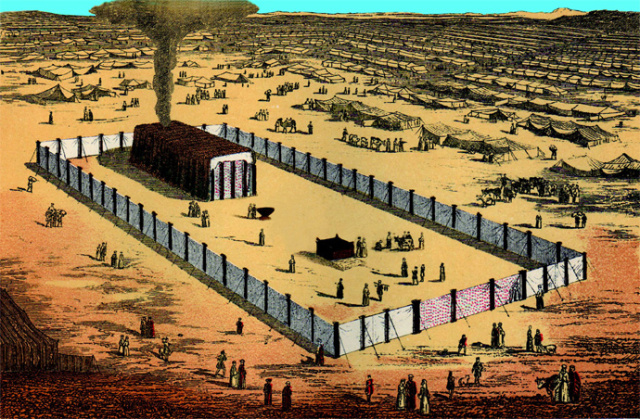
Long ago, in Old Testament times, people attempted to commune with God in various ways, even by offering up animal sacrifices. That system proved to be quite insufficient. For it never did take away sins (Heb. 10:4). Though it was insufficient, it did, however, and it does now, speak of Christ.
The tabernacle. Every detail of the tabernacle, with all its parts and in all the furniture, reminds us of who He is and what He did for us. It also speaks to us of His living temple, the church—the habitation of God.
The tabernacle shows to us, as it did to them, a “new and living way” by which to commune with God. It is the way of the living Christ, “which He consecrated for us through the veil, that is, His flesh” (Heb. 10:20).
Furthermore, the tabernacle gives us a pattern (as a map) of how we…
In Matthew 7:1-5, our Lord has been preaching on judgment. He tells us not to judge others; and whenever we try to correct another we must first look at and purify ourselves, then we can see clearly to help them.
In the sixth verse, most bibles put this verse in a special paragraph on its own. But D. Martyn Lloyd-Jones suggests that that is not right, that it should connect to the previous five verses, that it is the final statement on judgment. Indeed, I agree. It tells the spiritual Christian how he must judge another—with “a spirit of discrimination.” So, Jesus says in verse six…
Do not give what is holy to dogs, and do not throw your pearls before swine, lest they trample them under their feet, and turn and tear you to pieces.
What is meant here? First of all, pearls are the Christian message. And the dogs and the swine are all that is unholy and unclean, or all those who are unworthy to hear the Christian message. And we know that all of us have sinned, but in this context, Jesus was referring to those sinners who reject the gospel and the truth of God and those who hate Him and even snarl at the message of His truth.
So, Jesus is telling us that we ought not to just spread His word of truth to everyone, but only to those who are worthy of it—or who are seeking it. This may come as a surprise to some people. Some may say that since God loves all people, all should hear the gospel. But the end of verse six gives an explanation of why not. Jesus says that some who hear the gospel will “trample them [our words] under their feet, and turn and tear you to pieces.” In short, they reject the truth and even do damage to it and to you.
If you need an example of this, we can look at Jesus teaching. First, we can compare how He answered Pilate with Herod, in Luke 23:3 and 9. With Pilate, in verse three, Jesus answered him; but with Herod, in verse nine, he answered him nothing. Why? Because Jesus judged Pilate to be a genuine seeker of truth, but He knew that Herod cared nothing for the truth. He knew it by his attitude. And there are other examples. Many times Jesus would not speak to the Pharisees, or at least answer their questions. He instead would go and minister to the Gentiles and to the sinners, as also Paul did.
In all our evangelism efforts and when we seek to teach the truth to people, we should always learn who we are talking to, to see if they are worthy of hear us. Here are three sets of instructions that may be helpful to you in your speaking to others.
Learn to know what to give each person in each particular situation.
Learn to know the way to present the truth to each person. Learn to assess people.
Learn which aspect of truth is appropriate in each particular case.
Also, know that our presentation to unbelievers must be different than to believers. An unbeliever only needs one thing, the doctrine of justification by faith. They need only to know of their sinful life and their need of salvation. Any other bit of truth will have no meaning to them; or we should say that they will take it wrong because of their unregenerated state.
To believers, some have a need for basic truth only—the milk of the word; others should be fed more solid food—the meat of the word.
Intercessors are the workers of the prayer ministry. We can have great leaders and organizers, great groups, and wonderful prayer conferences, but without intercessors there would be no prayer ministry. Intercession is what makes the prayer ministry happen.
Recruiting Intercessors
There are always some faithful souls who are eager to pray that will volunteer to sign up as intercessors. Most of us, however, are just too independent and too occupied with our own affairs. Therefore, we need to be reminded to pray, and recruited to intercede for others.
You who are leaders in the prayer ministry are the recruiters. You need to stand in the gap for the prayer ministry that God has called you to (Ezek. 22:30). Here are some ideas on who you should recruit as intercessors.
Recruit those who are attracted to your ministry. Your ministry will be of a certain type; likewise, your personality and your way of doing things will be unique. If someone comes along and likes what they see, and senses that they are being called by God to join you, that is the person you want on your team.
Recruit your friends. Recruit those who are on all different levels of friendship to intercede for you and your ministry. They will be as circles around you. You may have two or three close friends to pray for you; they will be as tight circles around you. You will usually have ten to twenty casual friends; they should be as a larger prayer circle around you. Then there will always be a greater number, sometimes hundreds, who are your acquaintances; they should also pray for you, guarding your parameter.
Therefore, we should think of our friends as those who pray for us. And if they are truly our friends then they will prayer for us. But we should also recruit friends for our friends. This is part of the hard work of the prayer ministry.
Recruit those who seem to be more gifted as intercessors.I don’t know if I believe that God has given a spiritual gift of intercession to some people more than others. But we do know that there are some Christians who enjoy prayer more than others, and pray more.
Peter Wagner is one who believes that God has gifted some with a spiritual gift of intercession. He has said in his book, Prayer Shield that 5% of the average congregation has the gift of intercession. He states that those who have this gift “pray longer,” “pray with more intensity,” “enjoy prayer more and receive more personal satisfaction from their prayer times,” and, “are acutely aware of hearing quite clearly from God.”9
As I said, I am not ready to say that these people have a special spiritual gift; but I do accept what Peter Wagner has observed. Anyway, these are the type of Christians that you need on your prayer team. These are the people that we need to seek out and recruit—for ourselves and for others. Many of these great prayer warriors I have a feeling are not signed up to pray for as many people as they would like to pray for. I think many of them would be tickled if someone asked them to be an intercessor for them—because, after all, that is what they feel they are called to do!
Okay, now that you have an idea who to recruit, the question now is how to recruit? Basically, I would say, you will look for those who show an interest in prayer. Recruiting is just keeping your eyes open to see and find those whom God has prepared and given a heart for prayer. But since each type of ministry is different we must apply different methods of recruiting for each of them.
If you are part of a state, national or worldwide prayer ministry you may want to start by seeing who has subscribed to your prayer magazine, or who has purchased any of your prayer materials. Those will be some of the ones who are more interested in prayer. From that interested list you can send a letter asking them to sign up as an intercessor.
If you are part of a small group ministry or a church ministry you may want to call those whom you think are interested in prayer or approach them in person.
In whatever way you approach your interested people, make sure you communicate to them exactly what they will be required to do. For instance, tell them how often you will be sending them prayer requests, and tell them how much you expect them to pray. I think the more you make things clear to them the more they will be motivated to intercede.
Why all people need intercessors, and why some need them more than others
All of us who are human need someone to intercede for us because we all have needs and problems and we are all subject to temptation. If each of us had friends around us, interceding for us, we would all be better off—we would all have a better chance at overcoming temptation, and being protected.
Pastors and evangelists, I think need prayer more than others; therefore they need more intercessors interceding for them. Here are…
Three Reasons Why Pastors and Evangelists Need More Prayer
1. They receive a stricter judgment (James 3:1). Since God holds teachers and leaders more accountable, they need more prayer protection and prayer power.
2. Satan will be after them more. Pastors and evangelists preach and teach the Word more and proclaim the gospel more than others. Therefore, Satan hates them more and will temp them more than others.
3. Pastors and evangelists have more influence on others. They need prayer more than others because they have more responsibilities and they influence more people. If Satan overtakes a pastor, for example, the whole congregation is affected. Therefore, when we pray for a pastor we are in effect praying for the whole church.
I don’t think there has ever been a great preacher or evangelist that did not have faithful prayer warriors interceding for them. Peter Wagner in his Prayer Shield tells of two great evangelists, Charles Finney and Billy Graham, who each had their faithful intercessors praying for them. Finney had one known as “Father Nash” who frequently traveled with him; and Billy Graham had Pearl Goode, which Graham himself has attributed much of his evangelism power to.10
It is a shame that more pastors don’t try to recruit more intercessors for themselves. As we have seen, they certainly have a need to. Nonetheless, we should make it our aim and duty to intercede for them, and to recruit others to do the same.
Encouraging intercessors. Intercession is hard work. And sometimes, especially if answers don’t come quickly, the work is discouraging. If you are a leader in a prayer ministry you need to take time to encourage your intercessors. I suggest that you communicate regularly to let your prayer partners know that you appreciate their service to you.
The Yellow Salsify or Yellow Goatsbeard may be considered a weed much like the dandelion.
I have been waking up early these days, because of the early light and also because of the heat. This morning I decided, before church, to go for a walk to beat the heat of the day. To my surprise I saw so many of my favorite flower—the Yellow Goatsbeard. They were all over the place—dozens of them. But I didn’t bring my camera. Rats! (the above is an earlier picture)
Here you see just the large pod of the Goatsbeard. It is in the middle of the day so the flowerhas closed up.
After church, though it was hot, I decided to go back to where I had walked earlier to get a few pictures of the Yellow Goatsbeard. But they were gone! I saw some of their pods closed-up, but no flowers. Suddenly, it dawned on me; these particular flowers open in the early morning and then shut when the morning is over—I suppose to escape the bright sun or the heat.
I think we miss so much when we fail to get up in the morning with the sun. We not only miss the blooming of special flowers; we miss the voice of the Lord. Isaiah 50:4b says,
He awakens Me morning by morning,
He awakens My ear to listen as a disciple.
The words of this entire passage (vs 4-11) are Jesus’ words to His Father (and also words to us, to show us His obedient relationship with His Father). He wants us to have that same kind of relationship with Him and with the Father; and He wants us to get up in the morning and listen to Him as a disciple.
I think the fact that I was able to see the Yellow Goatsbeard when I went out at 6:30, and not see any of them later, tells me that God has special delights for us in the morning when we make a sacrifice for Him.
In this post we will first discuss prayer as approaching the throne with confidence, and how mediation aids us in that process. Next, just briefly, we will talk about Jesus as our High Priest and how He gives us confidence in prayer.
Meditation Helps Us Approach The Throne of God with Confidence
First of all, we need to understand this aspect of prayer—that prayer is an approach to the throne. And it is that, simply because that is the nature of prayer. According to Spurgeon, “True prayer is an approach of the soul by the Spirit of God to the throne of God. It is not the utterance of words, it is not alone the feeling of desires, but it is the advance of the desires to God, the spiritual approach of our nature toward the Lord our God.”5
Secondly, we could say that prayer is approaching…
These are large and far-reaching ministries, but I think they are just as important as the others. God wants us to prayer for all people, far as well as near. This is how these prayer ministries may be designed.
They may operate through the following avenues:
Magazines and newspapers. There are a few good Christian magazines and newspapers out there that focus on prayer. I get Herald of His Coming, which is jam packed with articles on prayer and it also provides the reader with about eight or ten News Briefs with prayer requests from various countries. I think newspapers and magazines like this one is an excellent way to recruit prayer ministry members, provide the reader with world-wide prayer requests, and to keep him or her motivated to pray.
A prayer letter. A letter may be mailed to all magazines and newspapers subscribers. Its purpose will be to invite…
Self-confidence is inherent within us. It is something we were born with, a gift we have from God. But that kind of confidence can be abused—when we give into our pride. A better, more reliable source of confidence, and what I want to talk about now, is God-confidence. This is something a bit different. When we are confident in God we are not confident in our strength, rather in our weakness, so that He is made strong in us (2 Cor. 12:9-10). We could also say that a God-confidence will serve to help our self-confidence—to help us not to abuse our self-confidence.
So, with that said, how do we get this God-confidence? I want to suggest four ways: by repentance and trust, by obedience, by meditation, and by fellowship.
Repentance and trust. The first step on your way to confidence is to admit your spiritual…







 Stephen Nielsen