Christ Our Life and Example as Priests of God

Stephen Nielsen's avatarPrayer A to Z

In my study of the priesthood, that we are all priest of God who follow after Christ our high priest, it is imperative that we keep our eyes on Jesus to follow after Him. He is our life (Col. 3:3-4), and the life and head of the priesthood. He gives stability to the priesthood; He is our cornerstone (1 Peter 2:4-8). Moreover, all that we are as priests are because of His life and work flowing through us; our compassion for others and our holy character is all from Him.

But to make certain that His power flowing through us and to have an effective prayer ministry we must obey Him and practice all the things that are required of a priest; for it is always through obedience that He shows us Himself and works through us (Jn. 14:21, Lu. 9:24).

But we should seek to go even beyond obedience…

View original post 348 more words

5 Reasons Why Every Christian Is Called To Reign With Christ in the Heavenly Places

Stephen Nielsen's avatarPrayer A to Z

In previous posts I have written about the Christian’s authority in Christ and about the heavenly places, which is the spirit realm, the place where we reign with Christ. In this post I want to give some reasons why God has called us to our high position.

1. To battle and be victorious.God has created us for battle and to be victorious over sin and Satan (Jud. 3:2).  Every person who is a believer is naturally an enemy of the devil (1 Peter 5:8) and desires in his spirit to take authority over him.

2. To rule with Christ over the nations. In the future all Christians will sit with Christ (bodily) on His throne and will rule with Him over the nations (Rev. 2:26, 3:21). In the light of this great future we must now be trained in conflict and in how to prevail over the enemy…

View original post 473 more words

What and Where are the Heavenly Places? – Ephesians 1:3, 1:20, 2:6, 3:10, 6:12

Stephen Nielsen's avatarPrayer A to Z


Ephesians 2:6 tells us that all believers reign together in Christ in the “heavenly places.”  The book of Ephesians mentions these heavenly places five different times (Eph. 1:3, 1:20, 2:6, 3:10, and 6:12).  Here are some observations I have made about these places:

1 . The heavenly places are the spirit realm where all spirits dwell. The triune God dwells there (Eph. 1:20); the angels and the demons dwell there (Eph. 6:12); and all human spirits are there too.

2. Since both God and Satan dwell in the heavenly places we know that it is a place of both good and evil, where both light and darkness exist.

3. It is the place where Christians are reigning with Christ (Eph. 2:6), taking authority over sin, Satan and the demons, because they trust in Him and remain in His domain of light.

4. Likewise, it is also the place where…

View original post 122 more words

The Source of Every Christian’s Authority

Stephen Nielsen's avatarPrayer A to Z


What is the source of every Christian’s authority? Well, first of all, let’s examine this authority.

Nelson’s Illustrated Bible Dictionary describes authority as “The power or right to do something, particularly to give orders and see that they are followed.  The word authority as used in the Bible usually means a person’s right to do certain things because of the position or office he holds.”

In view of this definition we can see that in a general sense everyone from a king to a small child has some degree or level of authority.  While a king has authority over many people, a child also has authority, even if it is only over a small puppy.    But there is one who has absolute authority over all things.  His name is Jesus.  He has authority over all people.  He has authority over all the creatures on the earth and in the…

View original post 679 more words

Two Uses of Our Authority in Prayer

Stephen Nielsen's avatarPrayer A to Z

This is an excerpt from my book Principles of Prayer.

1. Authority to pray for the lost. Since God desires all people to be saved (1 Tim. 2:4) He must also want us to pray for their salvation. Here are three things that God desires us to pray for the lost: (1) that their hostility or indifference for the gospel would be broken down and that God would grant them repentance (2 Tim. 2:25); (2) that the soil of their hearts would be prepared for the seed of the Word of God so that His Word would not return void, but would accomplish what He desires (Is. 55:11); and (3) that they may be liberated from the power of Satan—delivered out of darkness and into God’s marvelous light (2 Tim 2:26).

These are just a few things we could pray for the lost. I would encourage you to claim in…

View original post 784 more words

Authority in Prayer: Three Ways to Execute Our Authority over Our Enemy

Stephen Nielsen's avatarPrayer A to Z

08320012

Our power and authority is in Jesus Christ. If we position ourselves so that we are always abiding in Him we will have His authority. And it will come to us (as we are abiding) with the help of the Holy Spirit. When we ask Him to fill us and empower us He does it—and He gives us the holy life of Christ and exerts Christ’s authority in us and through us with power.

We do it in connection with prayer. Prayer is the normal means that God has bestowed on us to communicate with Him and to ask for His help in all things pertaining to our authority over our enemy. Here are three ways, in connection with prayer, in which we must execute our authority with power:

1. By prayer in the Holy Spirit.Prayer must always be in the Holy Spirit (Eph. 6:18). He helps us to…

View original post 794 more words

How to Pray Unceasingly — Four Points

Stephen Nielsen's avatarPrayer A to Z

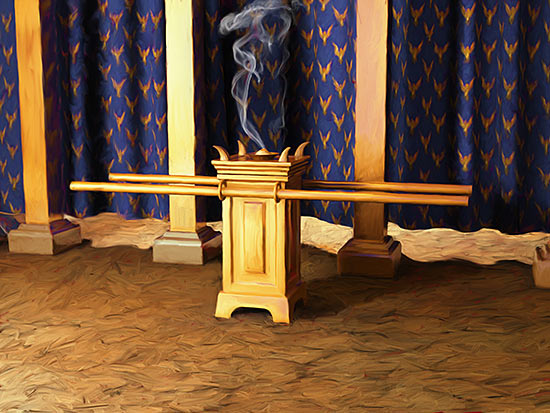
Unceasing prayer is so important and also very possible. The following discussion, centered on the Old Testament Tabernacle and the burning of incense, will help explain how we can pray unceasingly.

As we approach the important topic of burning the incense, which is symbolic of praying, let us consider how to answer the following four questions:

What makes the incense burn? As we have discussed in a previous post, the incense upon the golden altar was symbolic of Christ and His prayers. And the aroma of those prayers rose up to God only by the burning coals of the brazen altar, which prefigured His death for our sins on the cross.

But the question before us now is: what started (or ignited) the incense (which for us is the prayers) on the golden altar?   And what kept the prayers going?  Well, I believe it was, and is, the Holy Spirit. …

View original post 916 more words

Tap into the Power of Prayer by Loving Christ and His Cross

Stephen Nielsen's avatarPrayer A to Z

In order to get the full benefit of Christ’s work for us on earth and in heaven—which would include receiving forgiveness of sins and answers to prayer—we must come to faith in His blood, rather we must trust Him and believe in the value of His shed blood for us.

I like what Charles Fuller has said:

You can never benefit from Christ’s work, typified by the Golden Altar, until you accept what He has done for you at the Brazen Altar. You can never have the confidence that Christ intercedes on your behalf, until you have accepted his atoning death for your sins.  Remember, to get to the Golden Altar you must first pass by the Brazen Altar where the sacrificial lamb was slain and offered up.  So likewise, to know Christ’s constant watch-care over your life, you must first humbly kneel at the foot of the Cross, confess…

View original post 635 more words

Christ Makes Our Prayers as Sweet as Incense – Psalm 141:2

Stephen Nielsen's avatarPrayer A to Z

In Psalm141:2, David prayed, “Let my prayers be set before You as incense…” What a prayer! David really had a heart for God, and he wanted to please Him with his prayers—he wanted his prayers to be as the sweet smell of incense that rose up to God continually in the tabernacle.

It is my prayer that we would desire that our prayers—and really, our whole life—would be as incense to God.

Consider what the writer to the Hebrews said in Hebrews 9:24: “For Christ is not entered into the holy places made with hands, which are the figures of the true; but into heaven itself, now to appear in the presence of God for us.” M. R. DeHann comments on this verse:

The writer of Hebrews, therefore, leaves no doubt whatsoever about the typical significance of the tabernacle…the Holy Place (the tabernacle) was a ‘figure of the true’…

View original post 746 more words

How the Brazen Altar and the Altar of Incense Are Linked Together To Make Our Prayers Effective

Stephen Nielsen's avatarPrayer A to Z

In order to get a clear picture of what was happening in the tabernacle and to know how the incense was made to have true value, we must go back and a look at the brazen altar. For there the work of Christ began, where He suffered and shed His blood and died, purging our sins.  Thus the brazen altar is a type of the cross, which was Christ’s first work in God’s whole plan for our redemption.

The brazen altar, the place where animals were sacrificed, was made of brass and had no crown; thus it speaks to us of the suffering and humiliation of our Lord on earth. But the golden altar, with a crown of gold, speaks to us of the reigning of Christ in heaven.

The blood from the sacrifices of the first altar was symbolic of the blood of Christ; the incense of the second…

View original post 287 more words